How Difficult Is Kilimanjaro
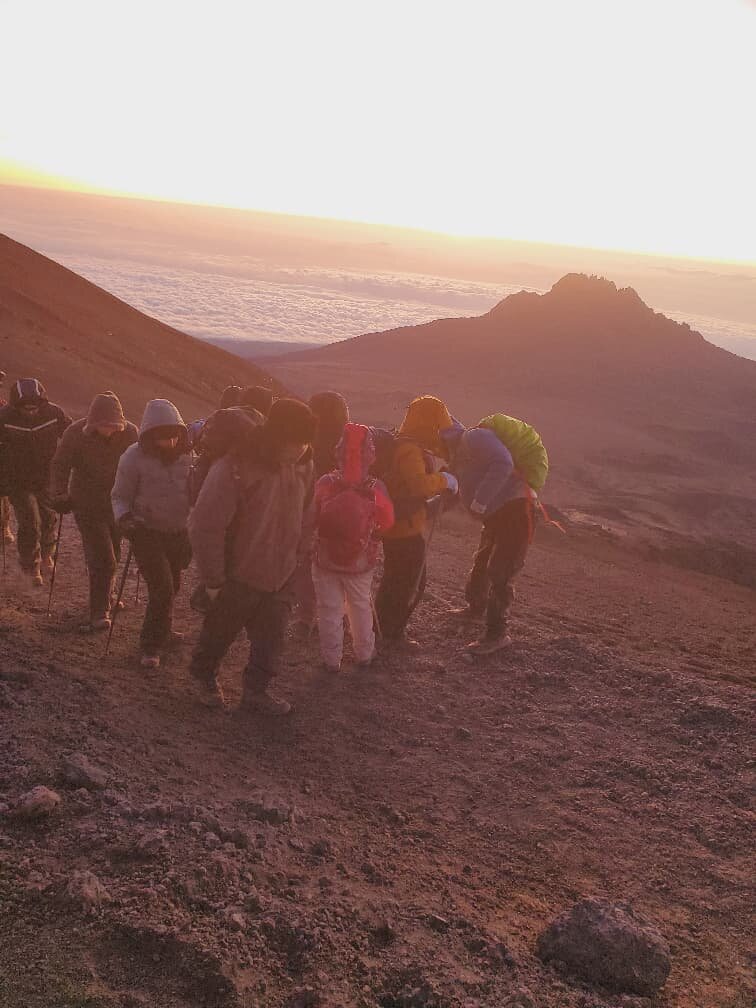
Kilimanjaro is a non technical trek that requires no ropes, ice axes or climbing experience, yet roughly one climber in three fails to reach the summit. The difficulty is almost entirely altitude rather than terrain or fitness, with summit night the hardest part. Kilimanjaro rises to 5,895 metres in northern Tanzania, where the air holds around half the oxygen of sea level.
How Hard a Kilimanjaro Climbing Trek Really Is
A Kilimanjaro trek occupies an odd category. Physically it is a long walk, and the daily distances would not trouble anyone who hikes at weekends. There is no exposure worth worrying about, no equipment beyond ordinary trekking gear, and guides have taken teenagers and people in their seventies to the top. It is also why first time trekkers with no mountain background make up so much of the traffic in any given week.
Yet the failure rate is substantial. Modern estimates put the overall figure at 65 to 80 percent reaching the summit across all routes, which means roughly one in three turns back. On five day itineraries it is nearer three in four.
Both things are true at once, and the reason is that the difficulty is not where people expect it. Kilimanjaro is not hard because of the walking. It is hard because of what happens to your body above about 4,000 metres, and because summit night asks for six hours of effort in the cold and dark on very little sleep.
The single most useful reframe: this is not a fitness test you can train your way past. It is an acclimatisation problem you solve by booking enough days and walking slowly, and a mental test you pass by keeping going on summit night when everything in you wants to stop.
Altitude as the Main Difficulty on a Kilimanjaro Trek
At the summit you are breathing air with roughly half the oxygen available at sea level. Everything follows from that, and the height gained between the gate and the crater rim is what the whole week is really organised around.
Acute mountain sickness is the leading reason climbers turn back. Mild forms feel like a bad hangover: headache, nausea, no appetite, broken sleep and a general flatness. It affects people regardless of fitness, age or sex, and marathon runners get it while casual walkers sometimes sail through.
There is a cruel wrinkle here. Very fit climbers often fare worse, because they walk faster, arrive at camp earlier and outpace their own physiology. Guides say pole pole, slowly slowly, from the first hour for exactly this reason.
The severe forms, fluid on the lungs and swelling of the brain, are uncommon but serious and can develop quickly. Treatment is descent, immediately, and dropping 500 to 1,000 metres usually resolves symptoms fast. Good operators run twice daily health checks with a pulse oximeter alongside symptom scoring, which catches problems early.
What reduces the difficulty is entirely predictable: more days, a route with climb high and sleep low sections, three to four litres of water daily, eating carbohydrates even without appetite, no alcohol or sleeping pills, and telling your guide about symptoms the first time rather than the third day.
Daily Walking and Terrain on a Kilimanjaro Trek
The walking itself is moderate. Four to seven hours on most days, on well established trails, with distances that would be unremarkable at home.
Ground varies by zone. The forest is often muddy and can be steep, particularly on Machame and Umbwe. Moorland is easier going and windier. Alpine desert around the high camps is loose rock and scree, and there is a rhythm to walking on it that takes a day to find. Nothing requires a hand on rock except the Barranco Wall.
What makes the days tiring is not the terrain but the pace and the altitude. Walking at two thirds of your natural speed for hours is more mentally taxing than physically demanding, and by the fourth day the accumulated effect of poor sleep and reduced appetite starts to show.
The Barranco Wall and Other Steep Sections
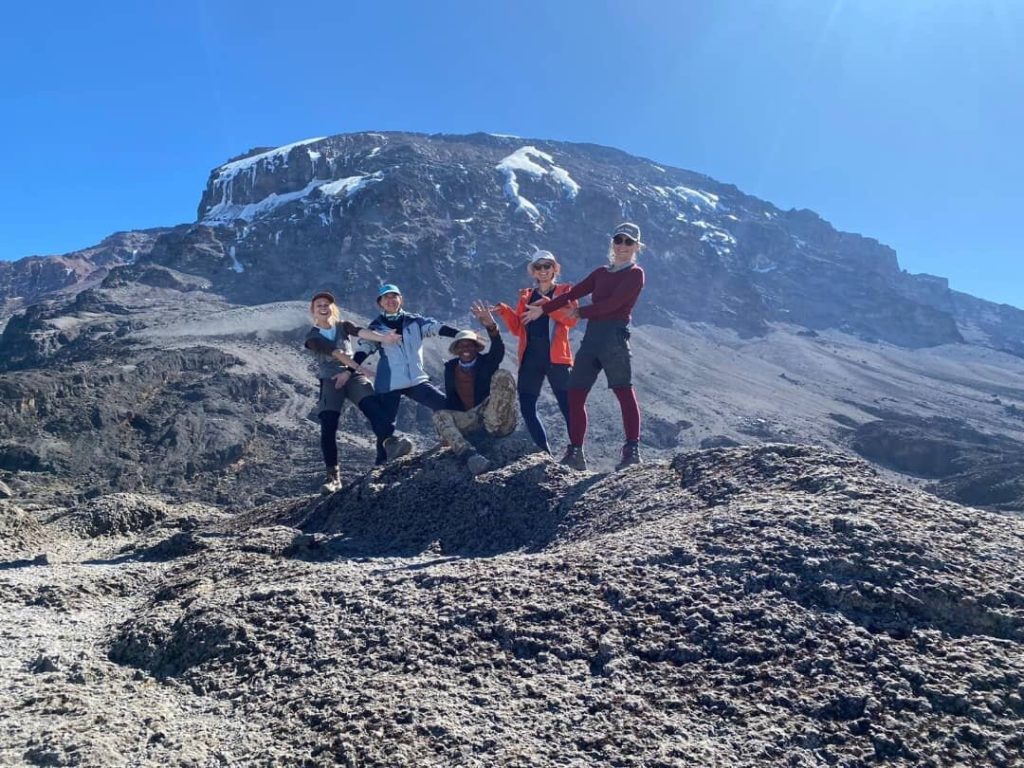
The Barranco Wall sits on the Machame, Lemosho, Shira and Umbwe routes and is the section people worry about most in advance. It is a 257 metre rock face and it is a scramble, not a climb. No ropes, no equipment, one or two places where you put a hand on the rock for balance. It takes about an hour and trekkers in their sixties and seventies do it every week of the season.
Stow your trekking poles before you start so your hands are free, and let the porters, who are faster and carrying more, go past. The view from the top, above the cloud with the summit ahead, is one of the better hours on the mountain.
Steeper ground exists elsewhere. The Umbwe ridge is the hardest sustained climbing on Kilimanjaro, gaining roughly 2,300 metres in two days. The scree between Kibo Hut and Gilman’s Point on the eastern routes is relentless. And the Western Breach, past the Arrow Glacier, is genuinely technical, exposed to rockfall and has a history of fatalities, which is why it is mountaineering rather than trekking.
Summit Night as the Hardest Part of the Climb
Every climber describes the midnight push as the difficult part, and the reasons stack rather than sit alone.
You are woken around eleven at night after several hours of poor sleep at roughly 4,700 metres. You leave at midnight into the cold and climb switchbacks on loose scree by headlamp for five to seven hours. Temperatures sit between about minus seven and minus twenty degrees Celsius before dawn, colder with wind chill. Water in a hydration hose freezes solid.
The distance is only around five kilometres. It takes five to seven hours, which tells you everything about the pace. You stop for five or ten minutes each hour to drink and eat, and you have to keep moving between stops to stay warm.
Then, at the crater rim, you are not finished. Trekkers arriving from the west at Stella Point walk another hour to the true summit at Uhuru Peak. Those arriving from the east at Gilman’s Point walk one and a half to two hours. Plenty of climbers stop at Gilman’s, and it is usually that arithmetic rather than the trail that ends the attempt.
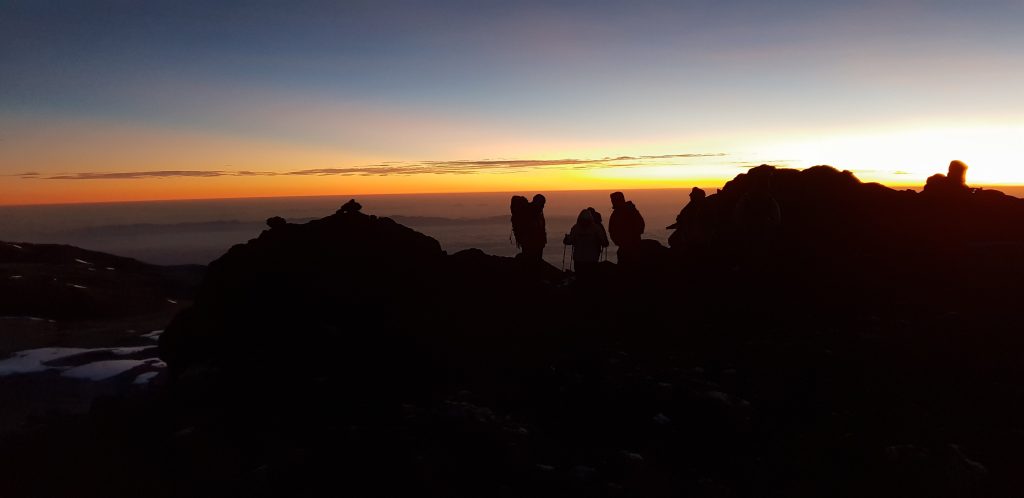
Summit night is the point where the trek stops being physical and becomes a decision you keep making every ten minutes for six hours. Guides know this, which is why they talk to you constantly.
Cold, Wind and Weather Difficulty on Kilimanjaro
You pass through five climate bands in a week, from warm rainforest at 21 to 27 degrees Celsius to arctic summit conditions. That range is the practical difficulty rather than the absolute cold, and it is why layering rather than one heavy jacket is the standard answer.
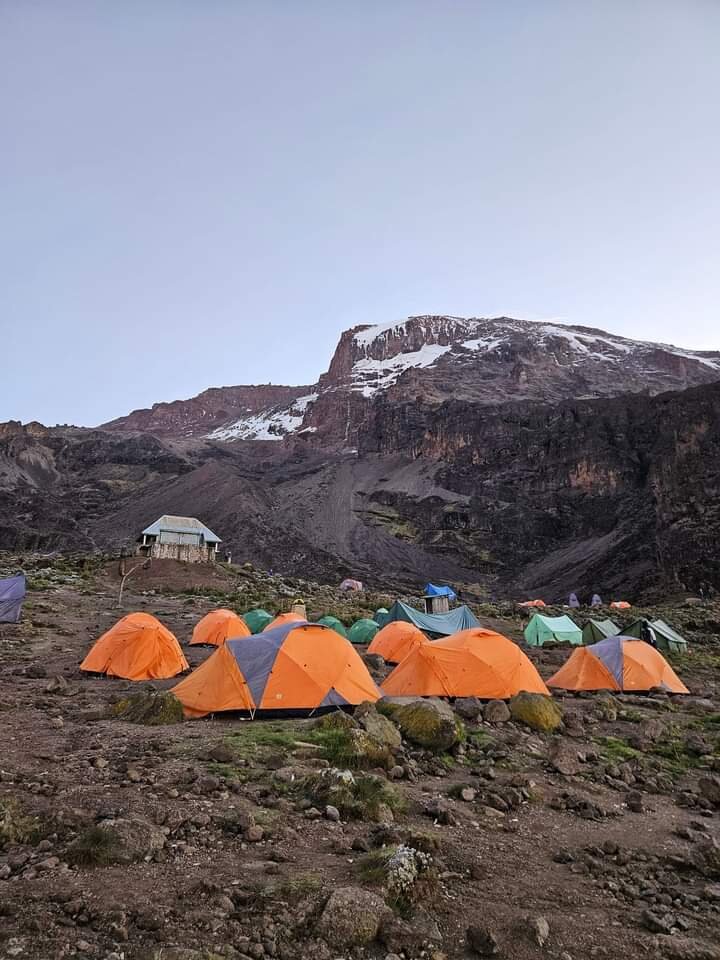
Alpine desert camps swing hardest. Warm in direct sun, then dropping ten to fifteen degrees within an hour once the sun goes behind the mountain. Nights at Barafu, Kibo Hut and School Hut are properly cold, with water freezing in bottles and condensation turning to ice inside the tent.
Rain adds its own difficulty in April, May and November: slippery trails, higher risk of a fall on the descent, poor visibility, and the wearing effect of never being quite dry. The northern routes sit in the rain shadow and are considerably better in those months.
The Descent and Why It Hurts
Underrated by almost everyone. After the summit you drop from 5,895 metres to a camp near 3,100 in a single afternoon, then walk out through the forest the following morning.
Scree descent is fast and jarring. Quadriceps and knees take the load and there is no way to avoid it. Trekkers who have never had knee trouble sometimes find the descent the most physically painful part of the week, and many people wear a knee support for it as a precaution rather than a remedy.
Trekking poles matter here more than anywhere. Marangu and Rongai finish with a walk of roughly 20 kilometres from Horombo to the gate, which is long rather than hard, and the forest sections are often slick.
Sleep, Food and Comfort on a Kilimanjaro Trek
Three quiet difficulties that compound.
Sleep goes first. Thin air disrupts it and almost nobody sleeps well above 4,000 metres. Lying still in a warm bag counts for something, and guides will tell you so, but by the time you reach the high camp you may have had several broken nights in a row.
Appetite goes next, and it goes for nearly everyone above about 4,000 metres. Eating anyway is the work. Carbohydrates increase your ventilation rate and are the most useful fuel in thin air, which is why the cook keeps putting starch in front of you and the guide notices whether you finished it.
Comfort is simply absent. Camp toilets are basic, washing is a bowl of warm water, and you wear the same clothes for days. None of this is difficult in isolation. Stacked on top of poor sleep and no appetite at day five, it wears on people.
Kilimanjaro Trekking Route Difficulty Compared
Hardest overall. Umbwe, by a distance. Roughly 2,300 metres of gain in two days with no rest, on the steepest trail on the mountain.
Hardest to complete. Five day Marangu, which is the gentlest walking and the weakest record at 27 to 30 percent. Easy underfoot, hard on the altitude.
Most physically demanding of the mainstream routes. Machame, with steep forest, the Barranco Wall and plenty of up and down. That up and down is why it works.
Gentlest walking. Marangu then Rongai, both with steady gradients and no scrambling. Both give your body less help with altitude in exchange.
Longest summit morning. Marangu, Rongai and the Northern Circuit, arriving at Gilman’s Point with one and a half to two hours of rim walking left.
Easiest to complete. Nine day Northern Circuit at 90 to 95 percent, then eight day Lemosho at around 90. Long, and easy in the only sense that matters.
Who Struggles Most on a Kilimanjaro Climb
Patterns emerge across a season, and they are not the ones people expect.
Climbers on five and six day itineraries struggle most, regardless of fitness. Fast walkers struggle, because pace is the one variable that reliably provokes altitude sickness. People who conceal symptoms struggle, because a headache managed on day three is a different problem from one revealed on day five.
Those who underhydrate and stop eating struggle. Those who arrive with brand new boots struggle in a mundane, blister shaped way that ruins a week, which is why picking boots and wearing them in deserves more attention than it usually gets. Those who booked the cheapest available operator sometimes struggle because nobody is monitoring them properly.
Who does well: people who walk slowly from the first hour, who take every optional acclimatisation walk offered, who eat when they do not want to, and who booked enough days.
Reducing the Difficulty Before You Fly
Book the longest itinerary your leave and budget reach, on Lemosho, Machame or the Northern Circuit. That decision alone moves your odds more than everything else combined.
Train for eight to twelve weeks with an emphasis on long days on your feet rather than intensity, in the boots and daypack you will actually use, and a week by week plan keeps that consistent when motivation dips. Aim to be comfortable walking five to eight hours on uneven ground on consecutive days.
Talk to your doctor about acetazolamide, sold as Diamox, which speeds up your body’s own adjustment. Choose an operator that carries bottled oxygen and a pulse oximeter and runs health checks twice daily. And if you have the time, three or four days on nearby Mount Meru at 4,562 metres beforehand is the most useful pre acclimatisation available in the region.
Frequently Asked Questions About Kilimanjaro Difficulty
Do I need climbing experience to trek Kilimanjaro?
No. The standard routes involve no ropes, no ice axe and no technical ground. The Barranco Wall requires using your hands for an hour and that is the extent of it. What you need is hill walking stamina and patience with a slow pace. The Western Breach variation is genuinely technical and is a separate matter entirely.
How fit do I need to be?
Fit enough to walk five to eight hours on rough uneven ground on consecutive days while carrying a daypack. That is a moderate bar and most reasonably active people can reach it with eight to twelve weeks of preparation. Being extremely fit does not protect you from altitude sickness and can work against you if it encourages a fast pace.
What percentage of climbers reach the summit?
Estimates put the overall figure at 65 to 80 percent, so roughly one in three turns back. By itinerary it ranges from 27 to 30 percent on five day Marangu to 90 to 95 percent on the nine day Northern Circuit. Duration predicts the outcome far better than fitness or which trail you pick.
Does spending more money make it easier?
Indirectly, mostly because more money buys more days. A seven day Machame at $2,000 to $3,000 is meaningfully easier to complete than a five day Marangu at $1,200 to $1,500. Moving from a budget operator around $1,500 to a mid range one at $2,500 to $3,500 also buys better food, working equipment and proper health monitoring, all of which help. Spending beyond mid range buys comfort rather than easier climbing.
Is Kilimanjaro dangerous?
It carries real risk, and altitude is the source of it rather than the terrain. Severe altitude illness can develop quickly and occasionally proves fatal, which is why immediate descent is the standard response and why bottled oxygen and helicopter evacuation exist. Climbing with a licensed operator that monitors you twice daily, and being honest about symptoms, reduces that risk substantially. Travel insurance covering trekking above 5,000 metres and evacuation is not optional.
What is the hardest part of climbing Kilimanjaro?
Summit night, without much dispute. Twelve to fourteen hours of movement starting at midnight, five to seven hours of scree switchbacks in temperatures around minus seven to minus twenty degrees Celsius, then one to two hours of rim walking, then a long descent. The second hardest, by most accounts afterwards, is the descent on the knees.
Booking Your Kilimanjaro Trip
The safari companies and tour operators listed on this website put trips like this together for a living and know which camps, guides and routes actually deliver. We are an independent guide to Kilimanjaro; we do not book or sell tours ourselves.
When you are ready, arrange your safari, tour or holiday with one of the recognised operators listed here. Tell them your dates and what matters most, and a real person, not a form, will handle the itinerary, park bookings and logistics for you.