7 Day Rongai Route Trek
Destinations: Tanzania, Mount Kilimanjaro
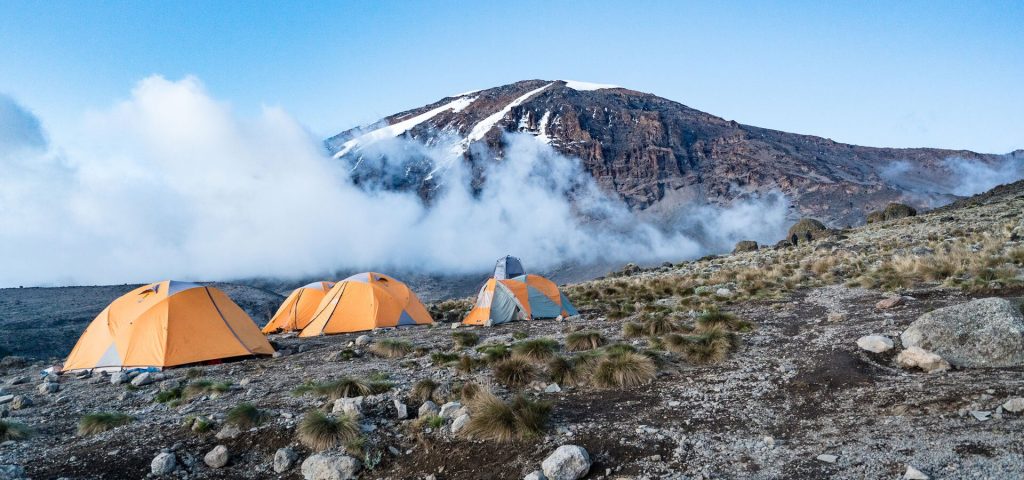
This climb takes the Rongai route up Kilimanjaro to Uhuru Peak at 5,895 metres, the highest point in Africa and the highest free-standing mountain in the world. The days build height slowly through rainforest, moorland and alpine desert to the summit cone, with a midnight start for the final push.
Day By Day
Day 1 Rongai Gate To First Cave Camp
You transfer from your Moshi hotel to the trailhead this morning after a kit check and briefing. The Rongai route climbs the drier northern side near the Kenyan border. You walk through pine forest and farmland to First Cave Camp at about 2,600 metres. This side is quieter and often clearer than the south. This is the quietest of the main trails and the only one approaching from the north, and how it gains its height explains both its appeal and its weaknesses. Layers come on and off through the day as the sun and the cold trade places. Higher up the air thins and the walking becomes about rhythm rather than speed.
Nights are cold and the stars overhead are as thick as you will ever see them. Each camp is a little higher, and the views open wider as the forest falls behind. The guides set a slow pace, pole, pole in Swahili, because going slowly is how you reach the top. Porters carry the camp ahead of you, and hot meals are ready when you reach each night’s stop. You drink three or four litres of water a day to help your body adjust to the altitude.
Day 2 First Cave To Kikelelwa Camp
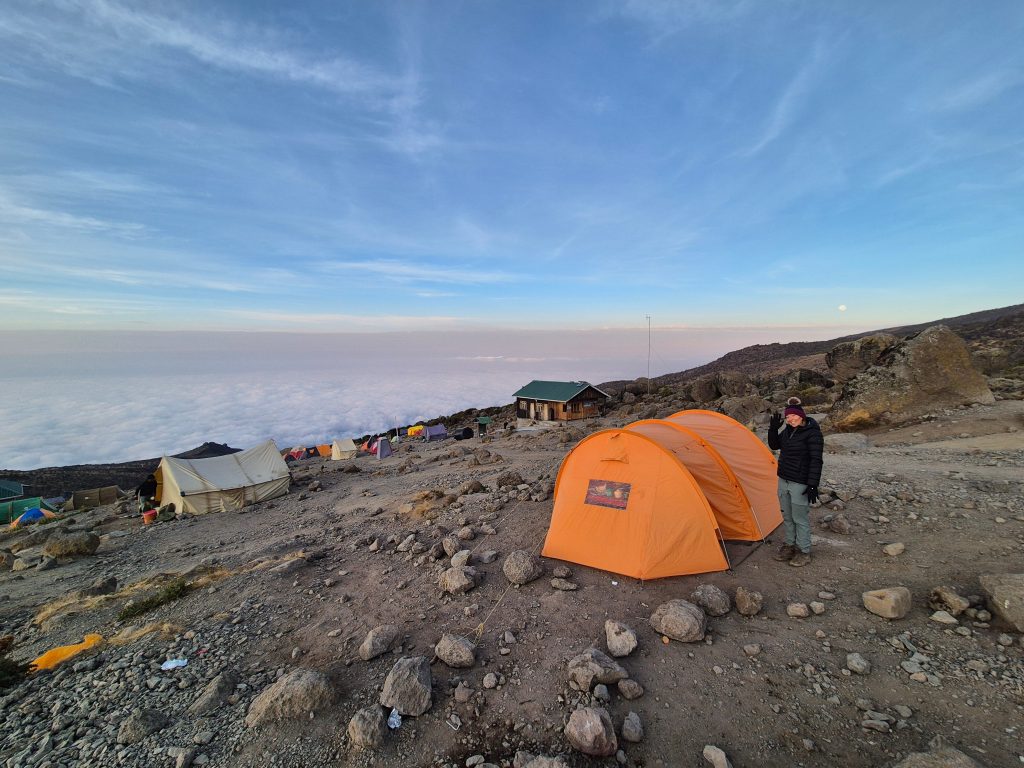
The path climbs into moorland with wide views north toward Kenya. You reach Kikelelwa Camp at around 3,600 metres by mid-afternoon. Mawenzi’s jagged peak grows ahead. Higher up the air thins and the walking becomes about rhythm rather than speed. Nights are cold and the stars overhead are as thick as you will ever see them. Each camp is a little higher, and the views open wider as the forest falls behind.
The guides set a slow pace, pole, pole in Swahili, because going slowly is how you reach the top. Porters carry the camp ahead of you, and hot meals are ready when you reach each night’s stop. You drink three or four litres of water a day to help your body adjust to the altitude. The crew check your oxygen and pulse each evening to see how you are acclimatising. Layers come on and off through the day as the sun and the cold trade places.
Day 3 Kikelelwa To Mawenzi Tarn Camp
A short steep day to Mawenzi Tarn at 4,330 metres, under Mawenzi’s spires. The afternoon is for resting at altitude. The tarn sits in a dramatic bowl of rock. Nights are cold and the stars overhead are as thick as you will ever see them. Each camp is a little higher, and the views open wider as the forest falls behind. The guides set a slow pace, pole, pole in Swahili, because going slowly is how you reach the top.
Porters carry the camp ahead of you, and hot meals are ready when you reach each night’s stop. You drink three or four litres of water a day to help your body adjust to the altitude. The crew check your oxygen and pulse each evening to see how you are acclimatising. Layers come on and off through the day as the sun and the cold trade places. Higher up the air thins and the walking becomes about rhythm rather than speed.
Day 4 Mawenzi Tarn Acclimatisation Day
A rest and acclimatisation day at the tarn below the peak. You climb a little higher then return to sleep. The extra day improves your odds on the summit. Removing this day is the entire difference between this climb and the six-day version of the same trail, and it costs roughly 15 percentage points. Each camp is a little higher, and the views open wider as the forest falls behind. The guides set a slow pace, pole, pole in Swahili, because going slowly is how you reach the top. Porters carry the camp ahead of you, and hot meals are ready when you reach each night’s stop.
You drink three or four litres of water a day to help your body adjust to the altitude. The crew check your oxygen and pulse each evening to see how you are acclimatising. Layers come on and off through the day as the sun and the cold trade places. Higher up the air thins and the walking becomes about rhythm rather than speed. Nights are cold and the stars overhead are as thick as you will ever see them.
Day 5 Mawenzi Tarn To Kibo Hut
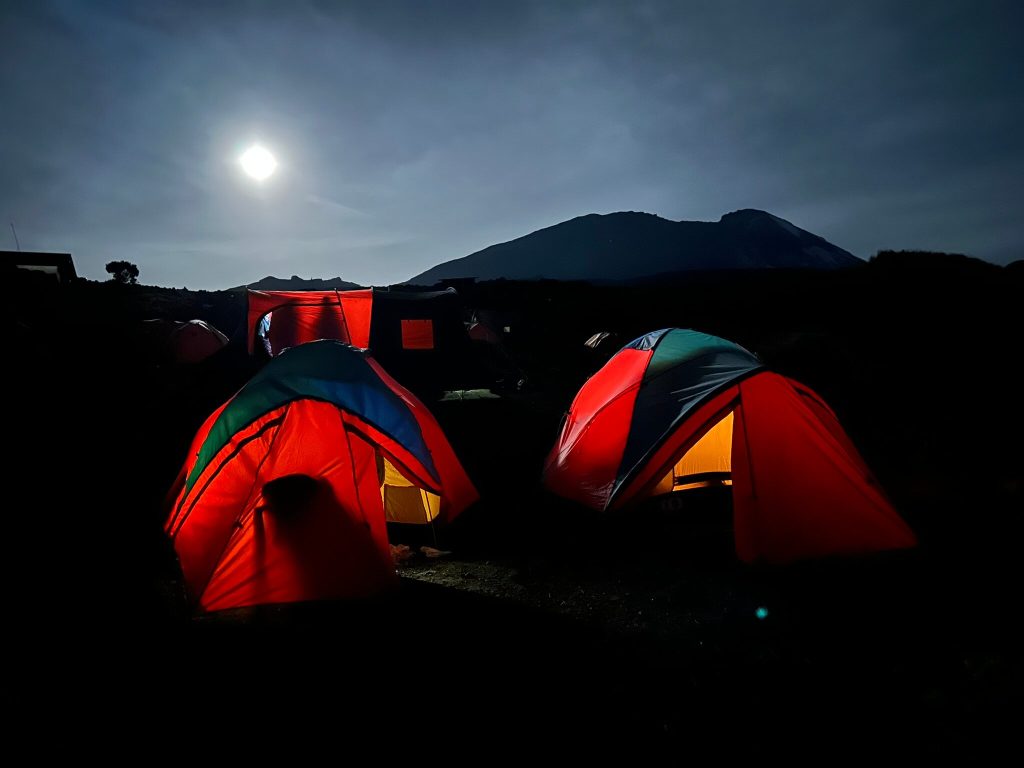
You cross the bare Saddle to Kibo Hut at 4,700 metres. The summit cone rises directly above camp. You rest early before the midnight start. The guides set a slow pace, pole, pole in Swahili, because going slowly is how you reach the top. Porters carry the camp ahead of you, and hot meals are ready when you reach each night’s stop. You drink three or four litres of water a day to help your body adjust to the altitude.
The crew check your oxygen and pulse each evening to see how you are acclimatising. Layers come on and off through the day as the sun and the cold trade places. Higher up the air thins and the walking becomes about rhythm rather than speed. Nights are cold and the stars overhead are as thick as you will ever see them. Each camp is a little higher, and the views open wider as the forest falls behind.
Day 6 Summit Night To Uhuru Peak Then Horombo
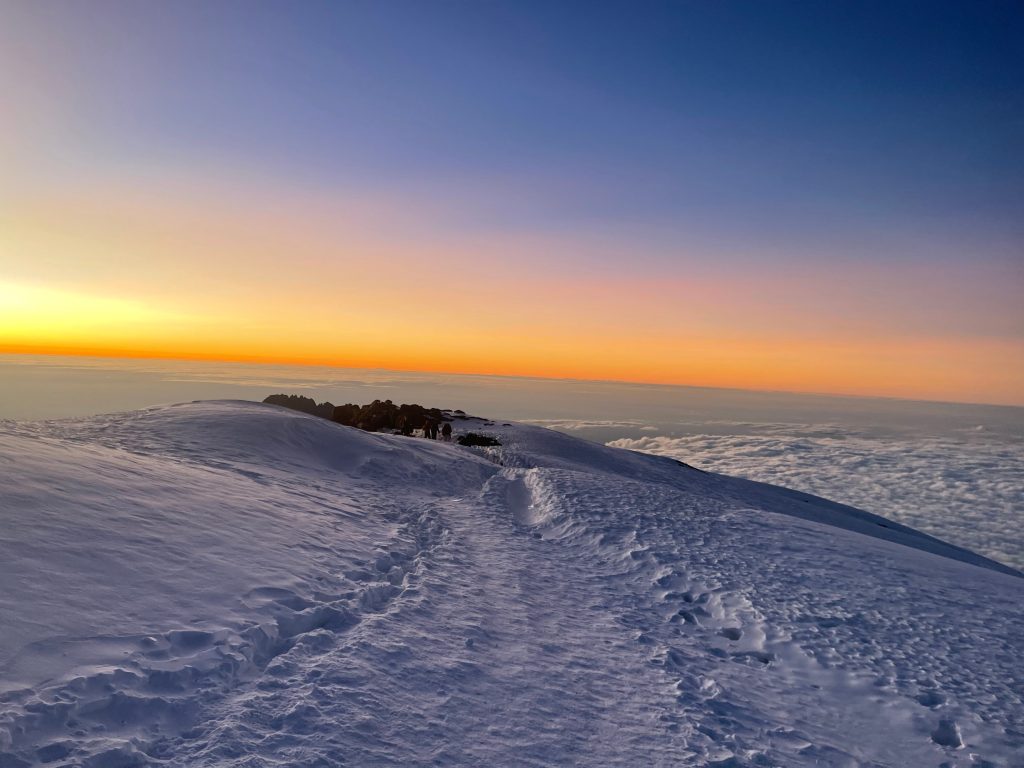
Leaving at midnight you climb scree to Gilman’s Point at 5,685 metres. The crater rim leads to Uhuru Peak, 5,895 metres, the roof of Africa. You descend all the way to Horombo Hut to sleep. Coming up from the east you reach Gilman’s Point rather than the Stella Point used on the southern seven-day climb, which adds half an hour or more along the rim. Porters carry the camp ahead of you, and hot meals are ready when you reach each night’s stop. You drink three or four litres of water a day to help your body adjust to the altitude. The crew check your oxygen and pulse each evening to see how you are acclimatising.
Layers come on and off through the day as the sun and the cold trade places. Higher up the air thins and the walking becomes about rhythm rather than speed. Nights are cold and the stars overhead are as thick as you will ever see them. Each camp is a little higher, and the views open wider as the forest falls behind. The guides set a slow pace, pole, pole in Swahili, because going slowly is how you reach the top.
Day 7 Horombo Hut To Marangu Gate
A long downhill through moorland and forest to the Marangu Gate. Summit certificates are issued at the gate. A vehicle returns you to Moshi. You drink three or four litres of water a day to help your body adjust to the altitude. The crew check your oxygen and pulse each evening to see how you are acclimatising. Layers come on and off through the day as the sun and the cold trade places.
Higher up the air thins and the walking becomes about rhythm rather than speed. Nights are cold and the stars overhead are as thick as you will ever see them. Each camp is a little higher, and the views open wider as the forest falls behind. The guides set a slow pace, pole, pole in Swahili, because going slowly is how you reach the top. Porters carry the camp ahead of you, and hot meals are ready when you reach each night’s stop.
What’s Included
- Kilimanjaro park, camping or hut, rescue and guide fees
- All meals on the mountain and a full mountain crew (guides, cook, porters)
- Transfers between Moshi and the trailheads
- Drinking water and safe, high-quality camping equipment
What’s Not Included
- International flights and Tanzania visa
- Personal trekking gear (hire available in Moshi)
- Travel insurance covering high-altitude trekking
- Tips for the crew, drinks and personal items
What Makes This Kilimanjaro Trip Special?
Standing on the roof of Africa is the draw, and the Rongai route is a sound way up. Longer routes give your body more time to adjust, and time on the mountain is the single biggest factor in reaching the top. You climb through five climate zones in a week, rainforest, heath, moorland, alpine desert and the arctic summit, watching the country change under your boots. No technical climbing is needed, only fitness, warm kit and a slow, steady pace, while the crew carry the camp, cook the meals and watch your health each evening. For a fit traveller with a week to spare, few trips give a clearer sense of achievement.
Are 7 Days Enough for a Kilimanjaro Trip?
On Kilimanjaro, days equal success. A seven-day Rongai climb reports around 85 percent, up from roughly 70 on the six-day version, and the rest day at Mawenzi Tarn is the whole of that gain. Shorter climbs cost less but summit rates fall as the days drop. This length suits a reasonably fit walker who has trained with hills and long days on foot. What no itinerary can promise is the summit, weather and altitude decide on the night, and a good crew will turn you around if your body says so. If you have the time, a longer route lifts your odds and eases the strain. Seven is the most widely booked length on the mountain, and the relationship between days on the mountain and reaching the top is steep enough that it is rarely worth booking fewer.
What Is the Estimated Cost of This Kilimanjaro Trip?
A Kilimanjaro climb is priced by the day, because park, camping and rescue fees run well over USD 100 per day before the crew and food. Operators who pay and equip their crews properly are not the cheapest, and cutting corners on Kilimanjaro is a false economy. As a guide, this trip runs from around USD 1,950 to 3,000 per person, with group size and hotel level the main variables. Tell an operator your dates and group size for a firm quote. A five-day hut climb costs less and delivers a fraction of the odds, which makes that saving a poor one.