Frequently Asked Questions
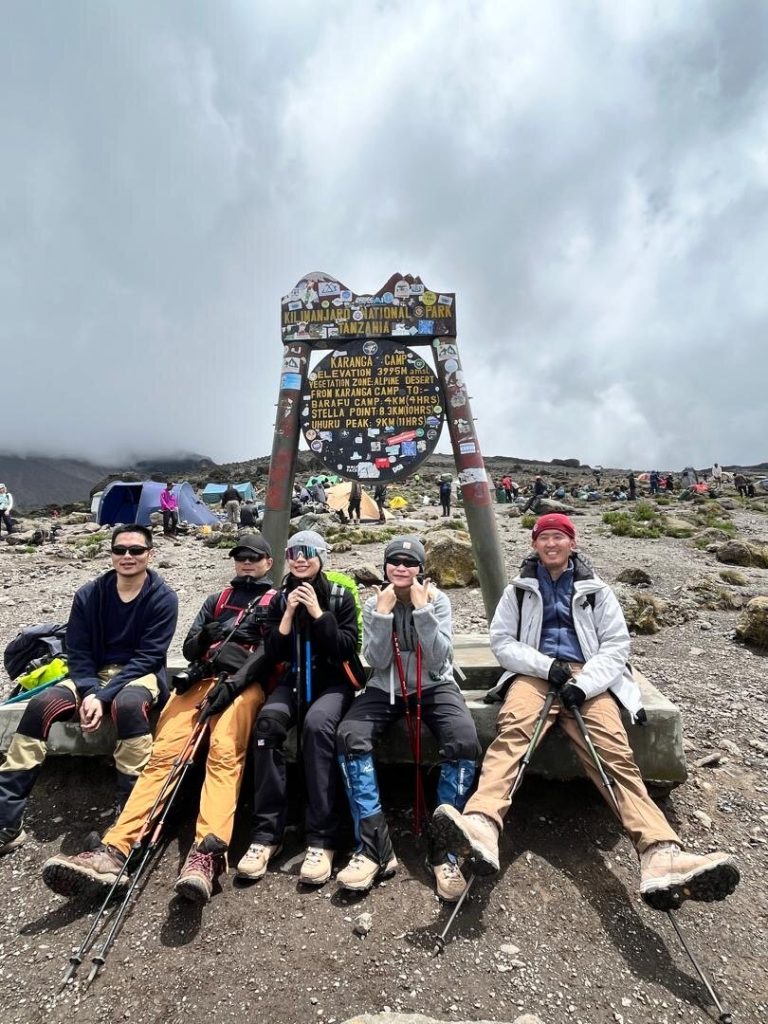
These are the questions that come up most often when people begin planning a climb. The answers here are short; the guides they point at go into detail. Nothing on this page is a quote or a booking, because this site is a reference rather than an operator.
Planning and Timing
When is the best time to climb Kilimanjaro?
There are two dry windows: January to early March, and late June to October. January, February, July, August, September and October are the strongest months, with clear skies and firm trails. April, May and November bring the rains, along with lower prices and empty camps. The park never closes, and the month you pick matters less than the length of your itinerary, so choose the number of days first and then optimise the month.
How many days should I book?
Seven is the sensible floor for a first trip to altitude and eight is better. Five-day treks report roughly 27 to 30 percent reaching the summit, six-day treks around half, seven-day treks 65 to 85 percent, and eight- and nine-day treks around 90. Adding a single night to a short itinerary is worth somewhere between 10 and 30 percentage points, which is more than anything else you can buy. The overview of how a climb is structured sets out what each extra day buys you.
Which route should I choose?
Eight-day Lemosho is the usual first choice, reporting around 90 percent. Seven-day Machame is the best value at roughly 85 percent and the easiest to join at short notice. Nine-day Northern Circuit has the strongest record at 90 to 95 percent and the quietest camps. Seven-day Rongai is the pick if your dates fall in a wet month. Five-day Marangu is the cheapest and the weakest, at 27 to 30 percent.
How long should I allow in total?
Add two nights in Moshi or Arusha either side of the trek plus travel days, and a climb realistically eats ten to fourteen days of leave. Check whether an advertised day count includes arrival and departure: some nine-day packages contain seven days of walking. Ask how many nights you sleep on the mountain, since that is the number that drives both the cost and your acclimatisation.
Difficulty, Altitude and Fitness
How difficult is Kilimanjaro?
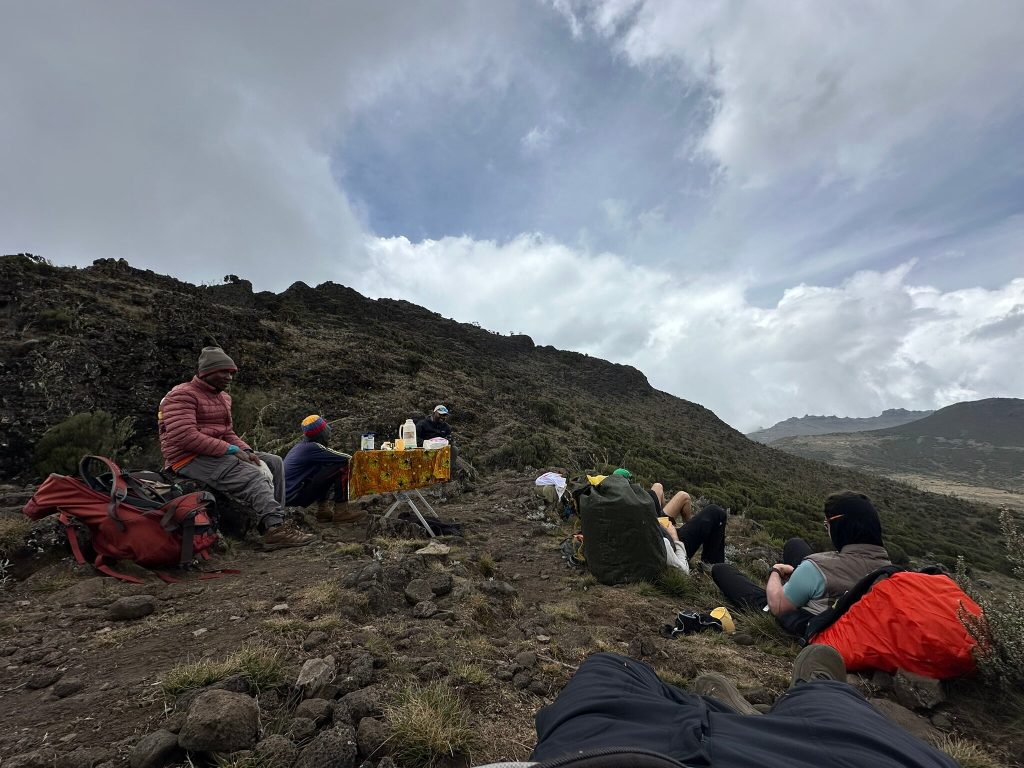
It is a non-technical trek. No ropes, no ice axes, no crampons, and nothing where a slip would be serious. The Barranco Wall asks you to put a hand on rock for about an hour and that is the closest the standard trails come to climbing. Even so, roughly one climber in three turns back. The difficulty is altitude rather than terrain, plus summit night, which asks for five to seven hours of effort in the cold and dark on very little sleep.
Can a beginner climb it?
Yes, and a large share of people on the mountain in any week have never been above 3,000 metres. Guides have taken teenagers and climbers in their seventies to Uhuru Peak. What matters is booking enough days, walking slowly and going with an operator that monitors you properly, as set out in the guide to what a first-time climber actually needs.
Will I get altitude sickness?
Mild acute mountain sickness is common and feels like a bad hangover: headache, nausea, no appetite and broken sleep. It affects people regardless of fitness, and very fit walkers sometimes fare worse because they climb faster than their physiology can follow. The severe forms are uncommon but serious, and the treatment is immediate descent. Drink three to four litres of water a day, eat carbohydrates even without appetite, skip alcohol and sleeping pills, and tell your guide about symptoms the first time rather than the third day.
How should I train?
Eight to twelve weeks, built around time on your feet rather than intensity. Aim to walk comfortably for five to eight hours on uneven ground on consecutive days, in the boots and daypack you will use on the mountain. Add one or two strength sessions for legs and core to protect your knees on the descent. Nothing you do at home builds tolerance for altitude, which is why booking eight days rather than five does more for your chances than any programme.
What is summit night like?
You leave a high camp between 4,670 and 4,750 metres around midnight, climb loose scree for five to seven hours to the crater rim, then walk another one to two hours to Uhuru Peak. Temperatures sit between roughly minus seven and minus twenty degrees Celsius. Counting the descent, the whole day runs twelve to fourteen hours. Nobody sleeps well beforehand, and that is the normal experience rather than a bad omen.
Gear and Practicalities
What do I need to pack?
Two bags. A porter-carried duffel capped at 15 kilograms including your sleeping bag, weighed at the gate, and a 25 to 35 litre daypack you carry all day with water, snacks, rain gear and a warm layer. The core of the duffel is layered clothing with no cotton anywhere, a four-season sleeping bag rated to minus ten or colder, a headlamp with spare batteries, and wide-mouth water bottles rather than a bladder, because hoses freeze on summit night.
What boots should I bring?
Mid-weight waterproof trekking boots with ankle support, bought half a size to a full size larger than usual because feet swell at altitude, and broken in over at least 50 kilometres before you fly. Insulated mountaineering boots are not needed on the standard routes. Carry your boots in hand luggage: almost everything else on the list can be hired in Moshi, and boots effectively cannot.
Can I hire gear rather than buy it?
Yes. Sleeping bags, down jackets, poles and gaiters are all available in Moshi at a fraction of retail, typically for around 100 to 200 US dollars for a full set, and it saves flying with kit you may use once. Boots are the exception.
Do I have to climb with a guide?
Yes. Independent trekking is not permitted inside the national park, so every climber travels with a registered operator and a licensed guide. For two people on a seven-day climb the crew usually runs to around ten: a lead guide, an assistant guide, a cook and six or seven porters. The guide to how a guided climb is organised explains what each of them does.
Cost and Tipping
How much does it cost?
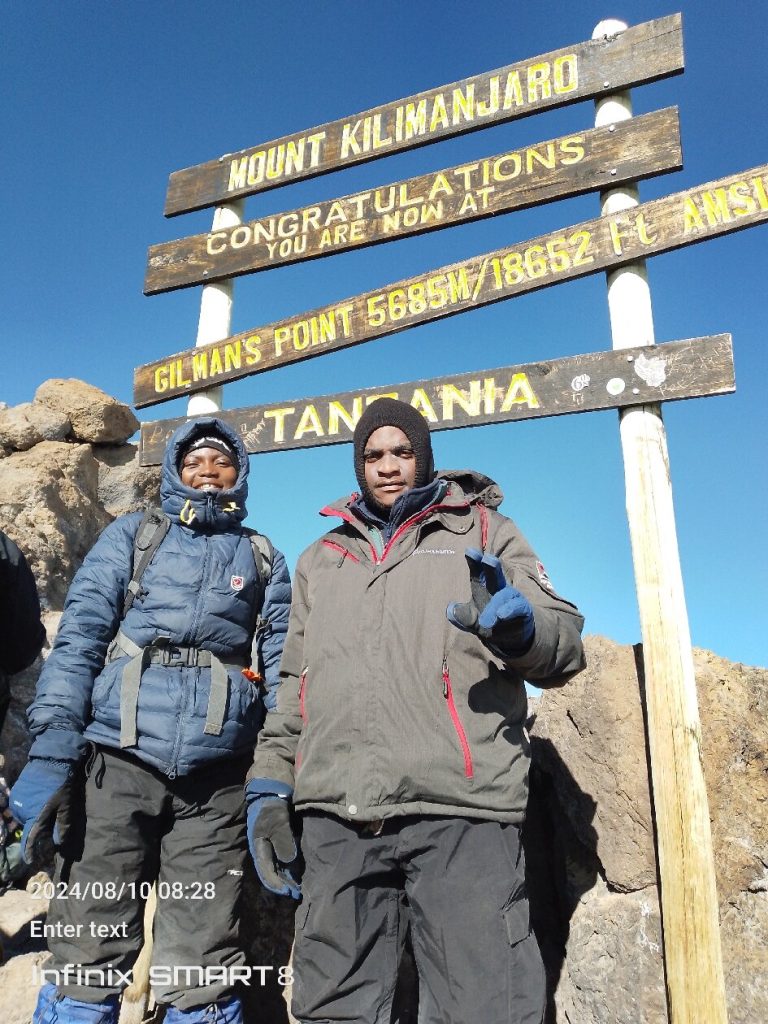
Operator packages generally run from about 1,500 to 6,000 US dollars per person. Budget climbs start around 1,500 to 1,900, mid-range treks sit at 2,200 to 3,500, and luxury or private expeditions run 4,500 and above. Most well-supported seven- or eight-day climbs land between 2,400 and 4,000. Once flights, tips, gear and insurance are added, a realistic all-in budget is 4,000 to 6,500. The breakdown of what makes up a quote explains why two prices for the same route can differ so widely.
Why are park fees such a large part of the price?
Because they are charged per person per day and per night, they scale with how long you stay rather than how comfortable your trek is, and they cannot be discounted. The conservation fee is roughly 70 US dollars per person per day, camping around 50 per night, hut fees on Marangu nearer 60, plus a one-off rescue fee of about 20. Most published tariffs exclude Tanzania’s 18 percent value added tax. On a seven-day trek the park bill alone comes to something like 800 to 1,000 US dollars.
How much should I budget for tips?
Roughly 250 to 350 US dollars per climber on a six- or seven-day trek and 350 to 450 on an eight- or nine-day one, with solo climbers paying more. Pooled across the group, the usual daily guidance is 20 to 25 for the lead guide, 10 to 15 for assistant guides and the cook, and 5 to 10 for each porter. Crew wages are a base amount that tips top up, so this is expected rather than optional. Bring clean US dollar notes from home.
Why should I avoid the very cheapest climbs?
Because park charges alone consume 800 to 1,000 US dollars of a seven-day quote, leaving very little for wages, food, equipment and safety kit. Operators at the bottom of the market typically pay porters below the agreed minimum, skip the value added tax, use worn tents and carry no oxygen. Cutting the price on this mountain shifts the cost onto somebody else.
About This Site
Do you book tours or safaris?
No. We are an independent guide. Arrange your trip with one of the recognised operators listed across this site.
Who writes this site and how are the guides put together?
The guides are researched from primary sources, including park regulations and published tariffs, operator itineraries, porter welfare standards and reported summit figures. There is a fuller account of the editorial approach and what the site does not do on the about page.
How current is the information?
Guides are reviewed regularly, but park fees and schedules change, always confirm current rates with the relevant park authority or your operator before travelling.
Can you recommend an operator?
The tour operators and safari companies listed on this site arrange trips in Kilimanjaro. Choose one that fits your dates and budget and reach out to them directly.
How do I plan a Kilimanjaro trip?
Start with the travel guide, then read the best-time, cost and where-to-stay guides. When you have a shape for the trip, send it to an operator for a quote.