Kilimanjaro Climbing Packages
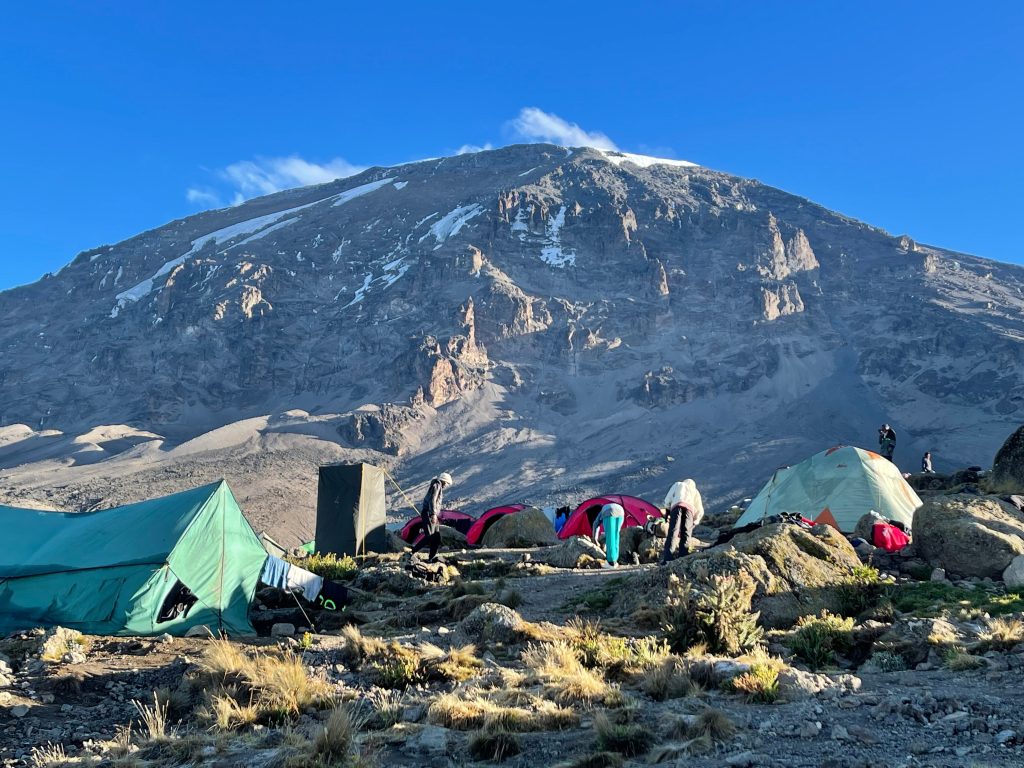
A Kilimanjaro climbing package is an all inclusive guided trek covering park permits, guides, porters, cook, meals, camping equipment, transfers and usually hotel nights either side. Packages are sold by route and duration, from five day Marangu to nine day Northern Circuit, as group joining or private departures. Booking through a licensed operator is compulsory inside Kilimanjaro National Park in northern Tanzania, where the summit stands at 5,895 metres.
What a Kilimanjaro Climbing Package Includes
Every climber on the mountain is on a Kilimanjaro trekking package of some kind, because independent trekking is not permitted. You cannot buy a permit and walk up alone, which means the package is not an upsell; it is the only way this mountain is climbed. What operators advertise as guided trekking tours is the same product under a different name.
A standard package covers all national park charges including the conservation fee, overnight fees and the rescue fee. It covers your crew, typically a lead guide, an assistant guide, a cook and six or seven porters for two climbers, along with their wages and their own park entry charges. It covers three meals a day on the mountain plus snacks and filtered drinking water.
Equipment included is normally tents, sleeping mats, a mess tent with tables and chairs, and cooking gear. Transport covers airport pick up, the transfer to your trailhead and collection at the exit gate. Most operators add one or two hotel nights in Moshi either side of the trek, a pre climb briefing, emergency oxygen and a first aid kit.
Read the inclusions line by line before comparing two prices. Whether hotel nights, a sleeping bag, airport transfers and bottled oxygen are inside or outside the quote can shift the real cost by several hundred dollars, and operators are not consistent about it.
Group Joining and Private Kilimanjaro Trekking Packages
Two ways to book, and the price difference between them is the largest single saving available on this mountain.
Group joining packages put you on a scheduled departure with other climbers, sharing the crew, the vehicle and the cook. Groups usually run between four and twelve people. You give up control of the date and your companions, and you get a substantially lower price. Guide ratios remain the same, generally one assistant guide per few climbers, so support does not thin out as the group grows.
Private packages give you your own crew and your own departure date, which suits families, couples wanting flexibility, corporate or charity groups, and anyone who wants a pace set entirely by them. Costs rise sharply per person as group size falls, and solo private climbers pay the most of all, because one trekker still needs a lead guide, a cook and several porters.
The middle path most people miss: two or three friends booking a private trek together capture most of the group discount without joining strangers.
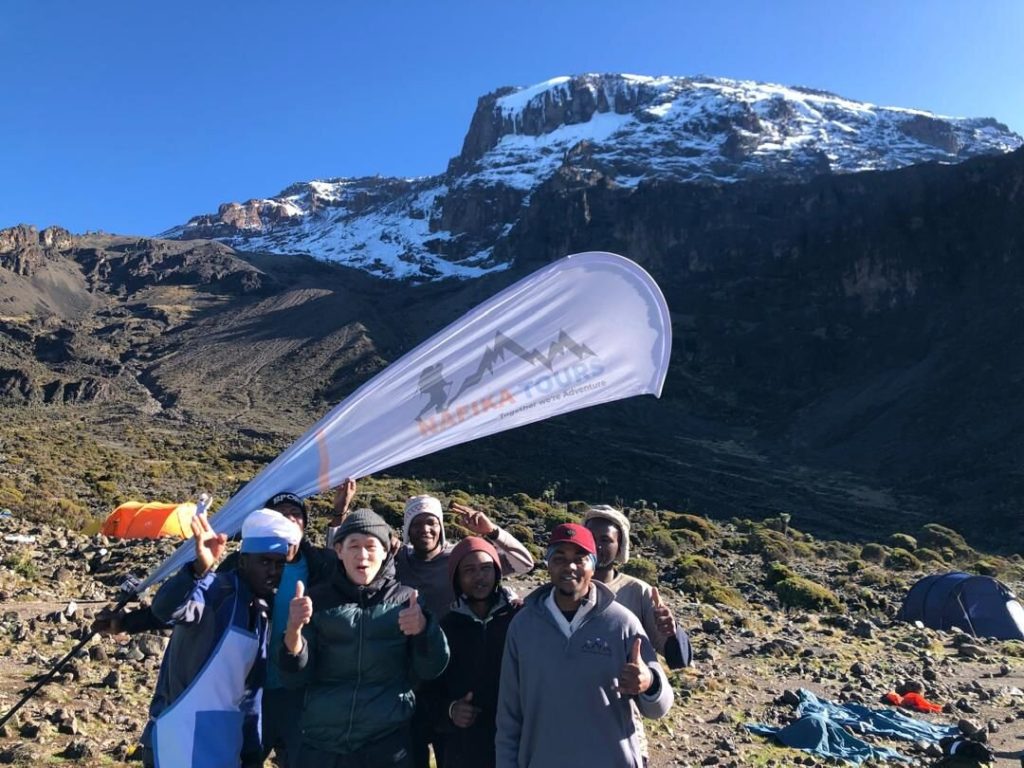
Kilimanjaro Climbing Packages by Route and Duration
Five and six day Marangu packages. The cheapest available, with hut sleeping rather than tents. Summit rates of 27 to 30 percent on five days and 50 to 65 on six.
Six and seven day Machame packages. The most widely sold on the mountain and the easiest to join at short notice. Seven days reports around 85 percent.
Seven and eight day Lemosho packages. The most recommended for first timers. Eight days reports near 90 percent and includes the Moir Hut acclimatisation night.
Six and seven day Rongai packages. Quiet northern trekking, and the better choice in wet months. Take the seven day version with the Mawenzi Tarn rest day.
Nine day Northern Circuit packages. The longest and dearest, with the strongest record at 90 to 95 percent and the emptiest camps.
Umbwe and Shira packages. Specialist options. Umbwe suits experienced high altitude trekkers; Shira starts high by vehicle and skips the forest.
The one thing worth checking on any package is whether the advertised day count includes your arrival and departure days. Some operators quote a nine day package that contains seven days of walking. Ask how many nights are spent on the mountain, which is the number that matters for both cost and acclimatisation.
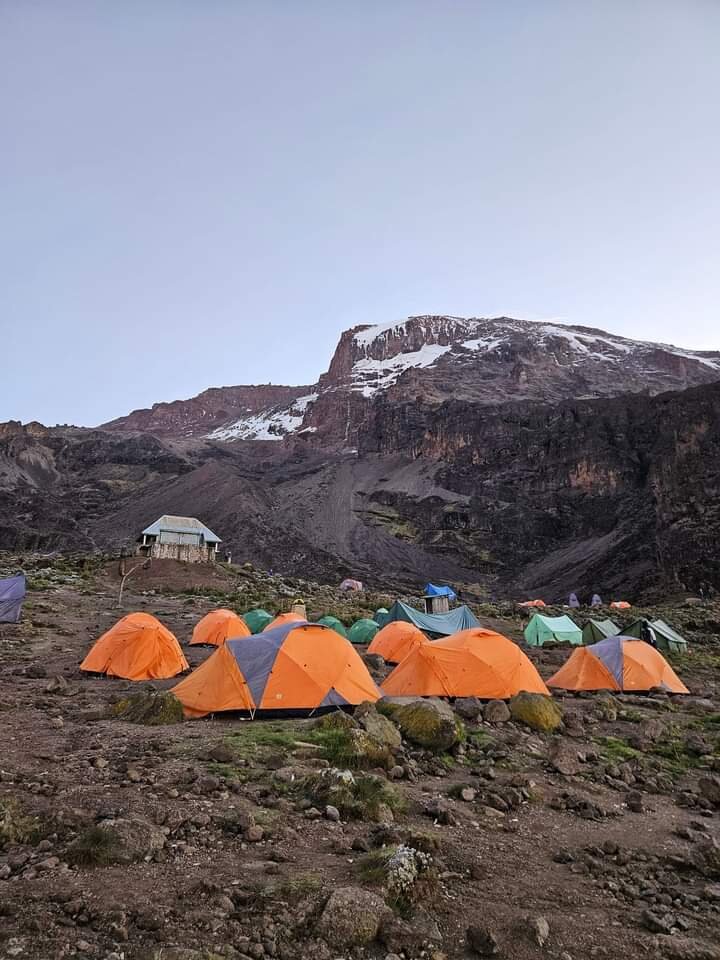
Budget, Mid Range and Luxury Trekking Packages Compared
Operators fall into three tiers and the distinction is not mainly about comfort.
Budget packages deliver the essentials and little else. Older tents, simpler food, minimal safety equipment, and often crew paid below the agreed minimum wage. They exist because there is demand for the lowest possible number, and they are usually built on shorter itineraries where the odds are already poor.
Mid range packages are where most climbers should be looking. Experienced guides with wilderness first aid training, twice daily health checks using a pulse oximeter, bottled oxygen carried on every climb, working equipment, food designed for eating at altitude, and crew paid to the standards set by the porters’ welfare project.
Luxury packages add larger walk in tents, private toilet tents, better hotels either side, richer menus, higher porter ratios and sometimes portable showers. These are pleasant and they barely move your chance of reaching the summit. If you have a fixed budget and a summit goal, spend it on extra nights rather than a bigger tent. A breakdown of what each part of a climb actually costs shows why the extra night is the better purchase.
The jump from a budget package to a mid range one buys things that affect whether you get up the mountain. The jump from mid range to luxury buys things that affect how comfortable you are while doing it. Both are legitimate purchases; they are not the same purchase.
Kilimanjaro Climbing Packages Combined with Safari or Zanzibar
Most operators sell the trek alongside an extension, and there is a practical reason beyond upselling: you are already in northern Tanzania, an hour from Arusha and the gateway to the northern safari circuit.
Safari extensions of two to four days typically cover Tarangire, Lake Manyara, the Ngorongoro Crater and the Serengeti, and a nine day Machame climb followed by the Serengeti and Ngorongoro is the standard shape of that pairing. Booked as a combined package they usually cost less than arranging them separately, because transfers and vehicles overlap. Wildlife on the mountain itself is limited to colobus monkeys in the forest zone and a handful of birds, so anyone hoping to see big game needs the extension rather than the trek.
Zanzibar extensions are the other common pairing, with a short flight from Kilimanjaro or Arusha to the coast. After a week of freeze dried nights at altitude, several days at sea level is a popular way to finish, and it is usually sold as a twelve day climb, safari and Zanzibar itinerary.
Practical note: book the extension after the climb rather than before. Doing the safari first eats into your acclimatisation window and leaves you starting the trek slightly worn down, and a rest day between them is worth building in. The longer fourteen day climb, safari and Zanzibar itinerary has room for that recovery day, which is part of why it travels more comfortably than the compressed versions.
How to Compare Two Kilimanjaro Trekking Quotes
Two quotes for the same route can differ by a thousand dollars and both be honest, or one can be quietly incomplete. A short checklist separates them.
Confirm the number of nights on the mountain rather than the advertised day count. Check whether park fees are itemised and whether the 18 percent tax is included, since most published tariffs exclude it. Ask what the guide to climber ratio is and how many assistant guides travel with the group, because that determines whether one person descending ends everyone’s trek.
Ask directly whether they are a partner of the Kilimanjaro Porters Assistance Project, which independently monitors wages, load limits and welfare. Ask what safety equipment is carried, specifically bottled oxygen and a pulse oximeter, and how often health checks happen. Ask what the turnaround policy is and who makes the decision.
Then check the boring lines: hotel nights included or not, airport transfers included or not, sleeping bag included or rented, and whether the price assumes two people sharing a room.
Booking, Deposits and Timing for a Kilimanjaro Trekking Package
Most operators take a deposit to hold a place, commonly a few hundred dollars per person, with the balance due before or on arrival. Deposits are generally non refundable, so read the cancellation terms before paying rather than after. Deposit, visa and insurance queries recur constantly and are answered on the frequently asked questions page.
How far ahead to book depends on when you want to go. July, August and the Christmas period fill up and want six to twelve months of notice, particularly for group departures and especially for Marangu, where hut space is capped and paid for in advance. January, February and September want a few months. April, May and November can often be arranged at short notice.
Book flights only once the trek dates are confirmed, and build in a buffer. If you are unsure which operator suits your dates, get in touch before you commit to either booking. Arriving the day before your briefing rather than the morning of it means a delayed bag becomes an inconvenience instead of a crisis, and it gives you time to rent whatever did not arrive.
What Is Not in a Kilimanjaro Climbing Package
The exclusions are consistent across almost every operator and they add up. International flights, the Tanzanian visa, travel insurance covering trekking above 5,000 metres with helicopter evacuation, tips for the crew, personal clothing and gear, vaccinations, extra hotel nights, and drinks or laundry off the mountain.
Insurance is the one to scrutinise. Many standard policies exclude altitudes above 4,000 or 5,000 metres, which makes them useless here. Check the altitude limit in the wording and confirm that evacuation is covered rather than only treatment.
Gear can be rented in Moshi, which is worth doing for anything bulky you will use once: sleeping bags rated well below freezing, down jackets, poles, gaiters and duffel bags. Boots and base layers should be your own, and boots must be broken in before you fly.
Best Time to Book and Trek Kilimanjaro
Two dry windows carry most departures. January to early March brings warmer days, clear mornings and often snow on the crater rim. Late June to October is the long dry season with the most settled weather, and July and August are the busiest weeks on the mountain.
April and May are the long rains and November brings shorter ones. Packages are cheaper in both, trails are muddier and the mountain is quiet. If your dates fall in a wet stretch, ask specifically about Rongai or the Northern Circuit, which sit in the rain shadow on the drier northern flank.
Early March and late November are the value weeks: close to dry season conditions at shoulder prices with a fraction of the traffic.
Frequently Asked Questions About Kilimanjaro Climbing Packages
How much do Kilimanjaro climbing packages cost?
Budget packages run about $1,500 to $1,900 per person, mid range $2,200 to $3,500, and luxury or private expeditions $4,500 and above. By route, five and six day Marangu is $1,200 to $2,200, seven day Machame $2,000 to $3,000, eight day Lemosho $2,400 to $3,500 and nine day Northern Circuit $2,800 to $3,800. Adding flights, tips, insurance and gear brings a realistic total to $4,000 to $6,500.
What park fees are included in the package price?
Conservation fees of roughly $70 per person per day, or about $82 with the 18 percent VAT that most published tariffs exclude. Camping fees of around $50 per person per night, or hut fees near $60 on Marangu. A one off rescue fee of about $20 per climber and roughly $2 per crew member in entry charges. On a seven day trek that comes to something like $800 to $1,000, which any reputable operator pays directly on your behalf.
Is a group package much cheaper than a private climb?
Yes, often by several hundred dollars per person, because crew, vehicle and cook costs are shared. Solo private climbers pay the most, since one trekker still needs a lead guide, a cook and five or six porters. Two or three people booking a private trek together capture most of the group saving. Ask operators when their next open departure leaves before assuming you need a private climb.
How much is the deposit and when is the balance due?
Deposits commonly run $100 to $300 per person, with some operators asking more for private climbs or peak dates, and the balance due either before departure or in cash on arrival in Moshi. Deposits are usually non refundable regardless of the reason for cancelling, so read the terms first. Marangu packages often need earlier deposits because hut space is booked and paid for in advance.
How much extra should I budget for tips?
Roughly $250 to $350 per climber on a six or seven day package and $350 to $450 on an eight or nine day one, with solo climbers paying more. Pooled across the group rather than per climber, the usual daily figures are $20 to $25 for the lead guide, $10 to $15 for assistant guides and the cook, and $5 to $10 for each porter. Bring clean US dollar notes from home, since cards do not work on the mountain.
Can I add a safari to my climbing package?
Yes, and it is usually cheaper booked together than separately. Two to four day northern circuit safaris covering Tarangire, Ngorongoro and the Serengeti generally add $600 to $1,500 per person depending on lodge standard, with park fees for those reserves charged separately from Kilimanjaro’s. Zanzibar extensions are the other common pairing. Schedule the extension after the climb and build in a rest day.
How far in advance should I book?
Six to twelve months for July, August and the Christmas period, particularly on Marangu where hut space is capped. Two to four months for January, February and September. April, May and November can often be arranged with a few weeks of notice. Book the trek before the flights so you are not paying to change tickets.
Booking Your Kilimanjaro Trip
The safari companies and tour operators listed on this website put trips like this together for a living and know which camps, guides and routes actually deliver. We are an independent guide to Kilimanjaro; we do not book or sell tours ourselves.
When you are ready, arrange your safari, tour or holiday with one of the recognised operators listed here. Tell them your dates and what matters most, and a real person, not a form, will handle the itinerary, park bookings and logistics for you.