14 Day Kilimanjaro Safari And Zanzibar
Destinations: Tanzania, Mount Kilimanjaro, Tarangire National Park, Serengeti National Park, Ngorongoro Crater and Zanzibar
This climb takes the Lemosho route up Kilimanjaro to Uhuru Peak at 5,895 metres, the highest point in Africa and the highest free-standing mountain in the world. The days build height slowly through rainforest, moorland and alpine desert to the summit cone, with a midnight start for the final push. After the descent you carry on to Tarangire, the Serengeti, the Ngorongoro Crater and Zanzibar to round out the trip.
Day By Day
Day 1 Londorossi Gate To Mti Mkubwa Camp
You transfer from your Moshi hotel to the trailhead this morning after a kit check and briefing. The Lemosho route starts in the west and is known for scenery and a high success rate. You walk through quiet rainforest to Mti Mkubwa, the Big Tree Camp. The western forest still holds buffalo and elephant sign. Every climb inside the park runs with a registered company and a licensed guide, and how that crew is put together is worth understanding before you compare quotes. Higher up the air thins and the walking becomes about rhythm rather than speed. Nights are cold and the stars overhead are as thick as you will ever see them.
Each camp is a little higher, and the views open wider as the forest falls behind. The guides set a slow pace, pole, pole in Swahili, because going slowly is how you reach the top. Porters carry the camp ahead of you, and hot meals are ready when you reach each night’s stop. You drink three or four litres of water a day to help your body adjust to the altitude. The crew check your oxygen and pulse each evening to see how you are acclimatising.
Day 2 Mti Mkubwa To Shira 2 Camp
You climb onto the open Shira Plateau at around 3,850 metres. The plateau is broad high moorland with Kibo rising ahead. The extra western days give your body time to adjust. Nights are cold and the stars overhead are as thick as you will ever see them. Each camp is a little higher, and the views open wider as the forest falls behind. The guides set a slow pace, pole, pole in Swahili, because going slowly is how you reach the top.
Porters carry the camp ahead of you, and hot meals are ready when you reach each night’s stop. You drink three or four litres of water a day to help your body adjust to the altitude. The crew check your oxygen and pulse each evening to see how you are acclimatising. Layers come on and off through the day as the sun and the cold trade places. Higher up the air thins and the walking becomes about rhythm rather than speed.
Day 3 Shira To Lava Tower To Barranco Camp
A key acclimatisation day, climbing high to the Lava Tower at 4,600 metres then dropping to sleep low. Climb high, sleep low is the pattern that carries people to the summit. Barranco Camp sits at about 3,960 metres under its great wall. Each camp is a little higher, and the views open wider as the forest falls behind. The guides set a slow pace, pole, pole in Swahili, because going slowly is how you reach the top. Porters carry the camp ahead of you, and hot meals are ready when you reach each night’s stop.
You drink three or four litres of water a day to help your body adjust to the altitude. The crew check your oxygen and pulse each evening to see how you are acclimatising. Layers come on and off through the day as the sun and the cold trade places. Higher up the air thins and the walking becomes about rhythm rather than speed. Nights are cold and the stars overhead are as thick as you will ever see them.
Day 4 Barranco Wall To Karanga Camp
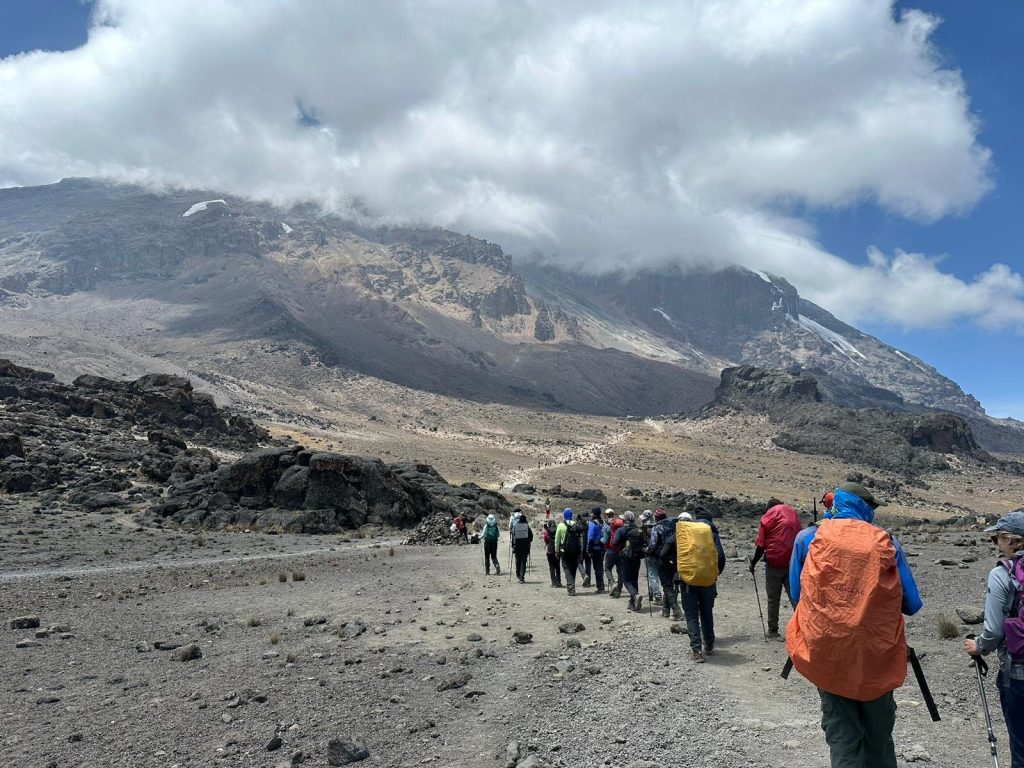
The morning begins with the Barranco Wall, a scramble that looks harder than it is. Beyond it the route rolls across ridges to Karanga Camp at around 3,995 metres. A shorter day keeps your legs fresh for the summit. The guides set a slow pace, pole, pole in Swahili, because going slowly is how you reach the top. Porters carry the camp ahead of you, and hot meals are ready when you reach each night’s stop. You drink three or four litres of water a day to help your body adjust to the altitude.
The crew check your oxygen and pulse each evening to see how you are acclimatising. Layers come on and off through the day as the sun and the cold trade places. Higher up the air thins and the walking becomes about rhythm rather than speed. Nights are cold and the stars overhead are as thick as you will ever see them. Each camp is a little higher, and the views open wider as the forest falls behind.
Day 5 Karanga To Barafu Base Camp
You climb the alpine desert to Barafu Camp at 4,673 metres, summit base. The peak looms close above and the crew prepare you for the night ahead. You eat and rest early before a midnight start. Porters carry the camp ahead of you, and hot meals are ready when you reach each night’s stop. You drink three or four litres of water a day to help your body adjust to the altitude. The crew check your oxygen and pulse each evening to see how you are acclimatising.
Layers come on and off through the day as the sun and the cold trade places. Higher up the air thins and the walking becomes about rhythm rather than speed. Nights are cold and the stars overhead are as thick as you will ever see them. Each camp is a little higher, and the views open wider as the forest falls behind. The guides set a slow pace, pole, pole in Swahili, because going slowly is how you reach the top.
Day 6 Summit Night To Uhuru Peak Then Mweka
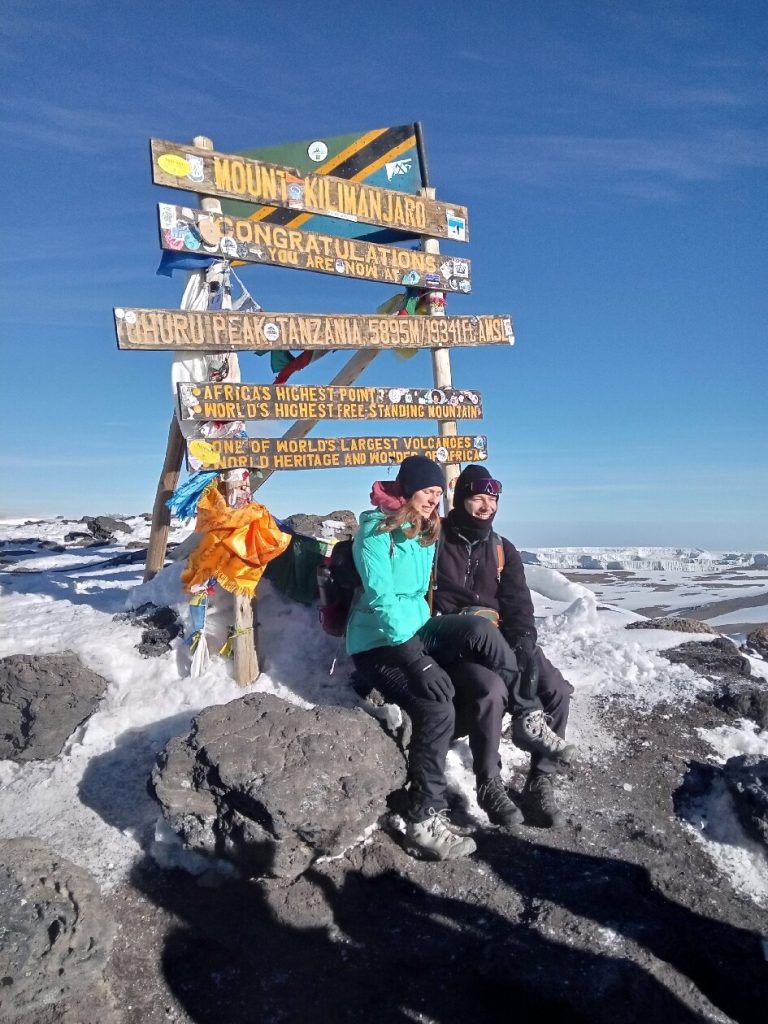
You set out near midnight, head-torches strung up the dark slope. At sunrise you reach Stella Point at 5,750 metres, then Uhuru Peak, 5,895 metres, the highest point in Africa. After photographs among the glaciers you descend to Mweka Camp in thicker air. You drink three or four litres of water a day to help your body adjust to the altitude. The crew check your oxygen and pulse each evening to see how you are acclimatising. Layers come on and off through the day as the sun and the cold trade places.
Higher up the air thins and the walking becomes about rhythm rather than speed. Nights are cold and the stars overhead are as thick as you will ever see them. Each camp is a little higher, and the views open wider as the forest falls behind. The guides set a slow pace, pole, pole in Swahili, because going slowly is how you reach the top. Porters carry the camp ahead of you, and hot meals are ready when you reach each night’s stop.
Day 7 Mweka Camp To Mweka Gate
A last downhill through moorland and forest to the Mweka Gate. Your summit certificate is issued, gold for reaching Uhuru Peak. A vehicle returns you to Moshi for a hot shower and a bed. The crew check your oxygen and pulse each evening to see how you are acclimatising. Layers come on and off through the day as the sun and the cold trade places. Higher up the air thins and the walking becomes about rhythm rather than speed.
Nights are cold and the stars overhead are as thick as you will ever see them. Each camp is a little higher, and the views open wider as the forest falls behind. The guides set a slow pace, pole, pole in Swahili, because going slowly is how you reach the top. Porters carry the camp ahead of you, and hot meals are ready when you reach each night’s stop. You drink three or four litres of water a day to help your body adjust to the altitude.
Day 8 Descend Kilimanjaro And Drive To Tarangire
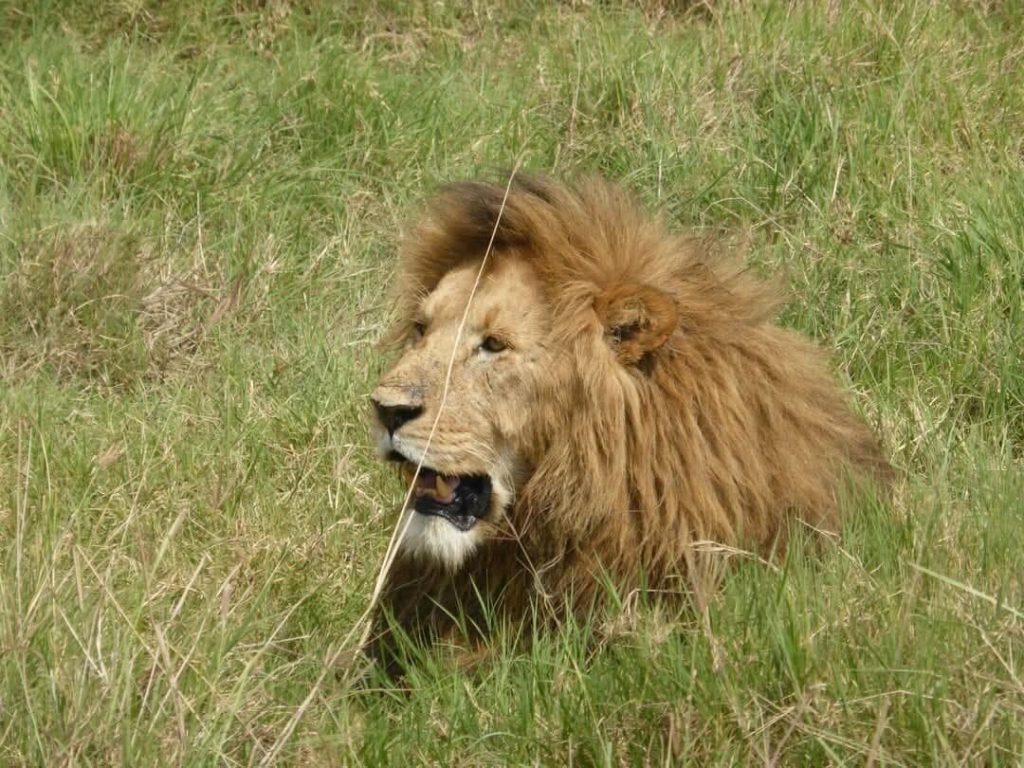
You come off the mountain in the morning and sign out at the exit gate, then take to the road for the move to Tarangire National Park. The country changes on the way, and you reach Tarangire in the afternoon. You head out on game drives as the light softens, a first look at the new ground. Big baobabs stand across the park, and the Tarangire River is the dry-season lifeline that pulls in game. It holds good lion, and dry-country species like fringe-eared oryx and gerenuk on its edges. Back at camp after dark, dinner is under the stars. The shorter twelve-day version of this itinerary skips Tarangire and drives straight for the Serengeti.
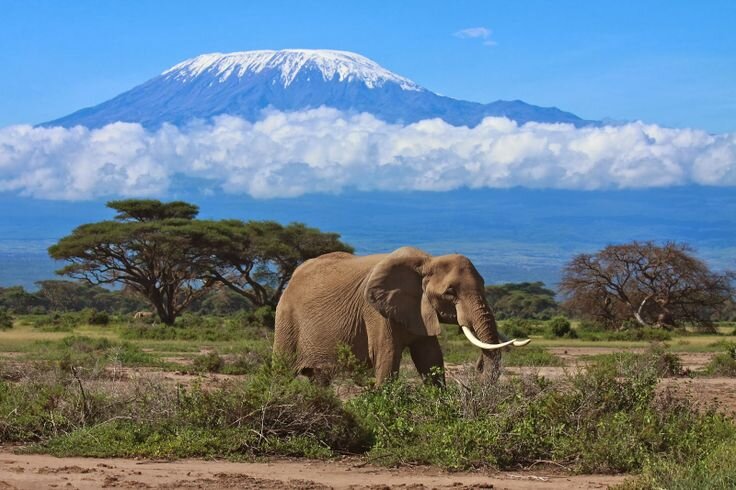
It is quieter than the Serengeti and makes an easy first or last stop on a northern trip. Tarangire is known for its elephant, in herds that can number several hundred in the dry season. The birding is among the best in the north, with over 500 species recorded. Nothing is promised in the wild, which is what makes a good sighting count. The country is quiet here, and on most outings you have it to yourselves.
Day 9 Transfer To Serengeti
A short morning out on game drives at first light in Tarangire, then to the airstrip and a light aircraft for the move to Serengeti National Park. The country changes on the way, and you reach the Serengeti in the afternoon. You head out on game drives as the light softens, a first look at the new ground. Big cats are the draw, lion on the kopjes, cheetah on the plains, leopard in the riverine trees. The Grumeti and Mara rivers hold crocodile and stage the migration’s river crossings in season. You rest through the midday heat and head out again as it cools.
The Serengeti runs to nearly 15,000 square kilometres of open plains and scattered kopjes. It carries the great wildebeest migration, well over a million animals moving in a yearly loop. Dawn balloon flights drift over the herds where operators offer them. The country is quiet here, and on most outings you have it to yourselves. Your guide has the ground worked out, and knows where the day is likely to lead.
Day 10 In Serengeti
A full day in Serengeti National Park. You are out on game drives, out early while the light is low and the country is at its best, with the guide working the ground slowly and time to stop for whatever the day turns up. The Grumeti and Mara rivers hold crocodile and stage the migration’s river crossings in season. Dawn balloon flights drift over the herds where operators offer them. The Serengeti runs to nearly 15,000 square kilometres of open plains and scattered kopjes. On most drives you will not pass another vehicle.
It carries the great wildebeest migration, well over a million animals moving in a yearly loop. Big cats are the draw, lion on the kopjes, cheetah on the plains, leopard in the riverine trees. Your guide has the ground worked out, and knows where the day is likely to lead. The morning is cool and the animals are moving, so the first hours out are the busiest. You carry a packed breakfast and stay out while the going is good.
Day 11 Transfer To Ngorongoro Crater
A short morning out on game drives at first light in the Serengeti, then to the road for the move to Ngorongoro Crater. The country changes on the way, and you reach the Ngorongoro Crater in the afternoon. You head out on game drives as the light softens, a first look at the new ground. The rim sits at 2,300 metres and mornings are cold before the sun clears the wall. The Ngorongoro Crater is the largest intact volcanic caldera in the world, about 260 square kilometres of floor. Back at camp after dark, dinner is under the stars.
It is one of the best places in Africa to see black rhino, completing the Big Five in a day. Lion, elephant, buffalo and flamingo-lined soda lakes share the crater floor. Its walls hold around 25,000 large animals, so game viewing is concentrated and reliable. The morning is cool and the animals are moving, so the first hours out are the busiest. You carry a packed breakfast and stay out while the going is good.
Day 12 Transfer To Zanzibar
A short morning out on game drives at first light in the Ngorongoro Crater, then to the airstrip and a light aircraft for the move to Zanzibar. The country changes on the way, and you reach Zanzibar in the afternoon. You head out by the sea as the light softens, a first look at the new ground. Stone Town is a UNESCO World Heritage site, a maze of lanes, carved doors and old trading houses. Spice farms outside town still grow the cloves, nutmeg and cinnamon that made the island rich. It is proper downtime after the early mornings of the safari. Travellers with less time usually stop after the plains on a nine-day climb and Serengeti trip.
Mnemba atoll offers the island’s best snorkelling, with reef fish, turtles and dolphins offshore. The food is a highlight, grilled seafood, coconut and spice along the Swahili coast. The north and east coasts are lined with white sand behind a protected coral reef. You carry a packed breakfast and stay out while the going is good. Around midday the heat sits heavy, and you rest in the shade before heading out again as it cools.
Day 13 In Zanzibar
A full day at Zanzibar. You are by the sea, out early while the light is low and the country is at its best, with the guide working the ground slowly and time to stop for whatever the day turns up. Spice farms outside town still grow the cloves, nutmeg and cinnamon that made the island rich. The north and east coasts are lined with white sand behind a protected coral reef. Mnemba atoll offers the island’s best snorkelling, with reef fish, turtles and dolphins offshore. Fresh seafood by the water closes the day.
The food is a highlight, grilled seafood, coconut and spice along the Swahili coast. Stone Town is a UNESCO World Heritage site, a maze of lanes, carved doors and old trading houses. Around midday the heat sits heavy, and you rest in the shade before heading out again as it cools. The guide reads the tracks and the birds, and there is no rush to be anywhere. Late in the afternoon the light turns gold and the game comes back to the open ground.
Day 14 Departure
A final morning by the sea before you leave, the best window of the trip for anything still on your list. You make the most of the early light, then your light aircraft flies you back toward Arusha. Mnemba atoll offers the island’s best snorkelling, with reef fish, turtles and dolphins offshore. The food is a highlight, grilled seafood, coconut and spice along the Swahili coast. You finish the trip having stood on the roof of Africa and seen Tarangire, the Serengeti, the Ngorongoro Crater and Zanzibar. Stone Town is a UNESCO World Heritage site, a maze of lanes, carved doors and old trading houses.
Spice farms outside town still grow the cloves, nutmeg and cinnamon that made the island rich. The north and east coasts are lined with white sand behind a protected coral reef. The country is quiet here, and on most outings you have it to yourselves. Your guide has the ground worked out, and knows where the day is likely to lead.
What’s Included
- Kilimanjaro park, camping or hut, rescue and guide fees
- All meals on the mountain and a full mountain crew (guides, cook, porters)
- Transfers between Moshi and the trailheads
- Full-board safari and park fees on the days shown
What’s Not Included
- International flights and Tanzania visa
- Personal trekking gear (hire available in Moshi)
- Travel insurance covering high-altitude trekking
- Tips for the crew, drinks and personal items
What Are the Reasons to Choose This Kilimanjaro Trip?
Standing on the roof of Africa is the draw, and the Lemosho route is a sound way up. Longer routes give your body more time to adjust, and time on the mountain is the single biggest factor in reaching the top. You climb through five climate zones in a week, rainforest, heath, moorland, alpine desert and the arctic summit, watching the country change under your boots. No technical climbing is needed, only fitness, warm kit and a slow, steady pace, while the crew carry the camp, cook the meals and watch your health each evening. Coming down to Tarangire, the Serengeti, the Ngorongoro Crater and Zanzibar afterwards means you go home having done the mountain and the wildlife both.
How Much Can You See on a 14 Day Kilimanjaro Trip?
On Kilimanjaro, days equal success. Seven of these fourteen days are spent climbing, and a seven-day Lemosho ascent reports around 85 percent, which is the figure that matters for the summit however long the rest of the trip runs. Shorter climbs cost less but summit rates fall as the days drop. This length suits a reasonably fit walker who has trained with hills and long days on foot. What no itinerary can promise is the summit, weather and altitude decide on the night, and a good crew will turn you around if your body says so. Adding the safari and beach after the climb is the right call if you have come this far, since the rest of Tanzania is close. Read the inclusions line by line, because what counts as part of an all-inclusive trekking package varies between operators.
How Much Should You Budget for a Kilimanjaro Trip Package?
A Kilimanjaro climb is priced by the day, because park, camping and rescue fees run well over USD 100 per day before the crew and food. Operators who pay and equip their crews properly are not the cheapest, and cutting corners on Kilimanjaro is a false economy. As a guide, this trip runs from around USD 4,050 to 6,550 per person, with group size and hotel level the main variables, plus the safari and beach portion. Tell an operator your dates and group size for a firm quote. Firm quotes come from operators rather than from this site, and there is a short guide to how to approach them and what to ask.