8 Day Lemosho Route Trek
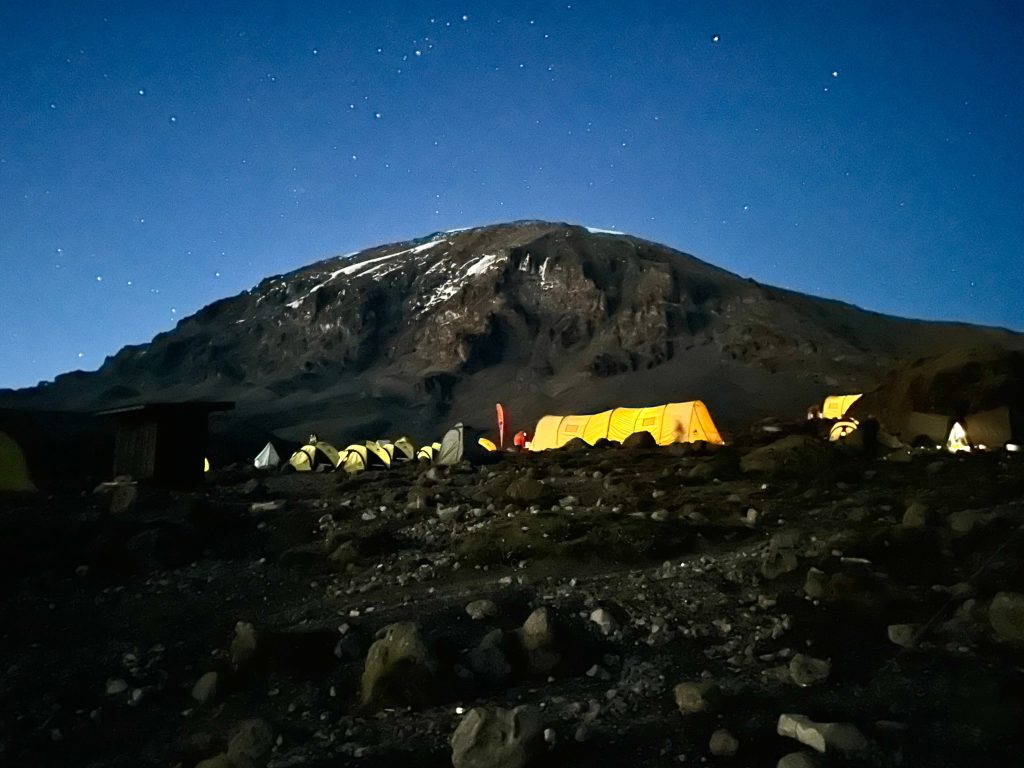
Destinations: Tanzania, Mount Kilimanjaro
This climb takes the Lemosho route up Kilimanjaro to Uhuru Peak at 5,895 metres, the highest point in Africa and the highest free-standing mountain in the world. The days build height slowly through rainforest, moorland and alpine desert to the summit cone, with a midnight start for the final push.
Day By Day
Day 1 Londorossi Gate To Mti Mkubwa Camp
You transfer from your Moshi hotel to the trailhead this morning after a kit check and briefing. The Lemosho route starts in the west and is known for scenery and a high success rate. You walk through quiet rainforest to Mti Mkubwa, the Big Tree Camp. The western forest still holds buffalo and elephant sign. The crew check your oxygen and pulse each evening to see how you are acclimatising. Layers come on and off through the day as the sun and the cold trade places.
Higher up the air thins and the walking becomes about rhythm rather than speed. Nights are cold and the stars overhead are as thick as you will ever see them. Each camp is a little higher, and the views open wider as the forest falls behind. The guides set a slow pace, pole, pole in Swahili, because going slowly is how you reach the top. Porters carry the camp ahead of you, and hot meals are ready when you reach each night’s stop.
Day 2 Mti Mkubwa To Shira 2 Camp
You climb onto the open Shira Plateau at around 3,850 metres. The plateau is broad high moorland with Kibo rising ahead. The extra western days give your body time to adjust. Layers come on and off through the day as the sun and the cold trade places. Higher up the air thins and the walking becomes about rhythm rather than speed. Nights are cold and the stars overhead are as thick as you will ever see them.
Each camp is a little higher, and the views open wider as the forest falls behind. The guides set a slow pace, pole, pole in Swahili, because going slowly is how you reach the top. Porters carry the camp ahead of you, and hot meals are ready when you reach each night’s stop. You drink three or four litres of water a day to help your body adjust to the altitude. The crew check your oxygen and pulse each evening to see how you are acclimatising.
Day 3 Shira Plateau Acclimatisation Walk
A day high on the plateau, walking to a viewpoint over 4,000 metres then sleeping lower. The added acclimatisation is why Lemosho posts strong summit rates. Kibo fills the sky to the east. This is the day the seven-day version of the route leaves out. Higher up the air thins and the walking becomes about rhythm rather than speed. Nights are cold and the stars overhead are as thick as you will ever see them. Each camp is a little higher, and the views open wider as the forest falls behind.
The guides set a slow pace, pole, pole in Swahili, because going slowly is how you reach the top. Porters carry the camp ahead of you, and hot meals are ready when you reach each night’s stop. You drink three or four litres of water a day to help your body adjust to the altitude. The crew check your oxygen and pulse each evening to see how you are acclimatising. Layers come on and off through the day as the sun and the cold trade places.
Day 4 Shira To Lava Tower To Barranco Camp
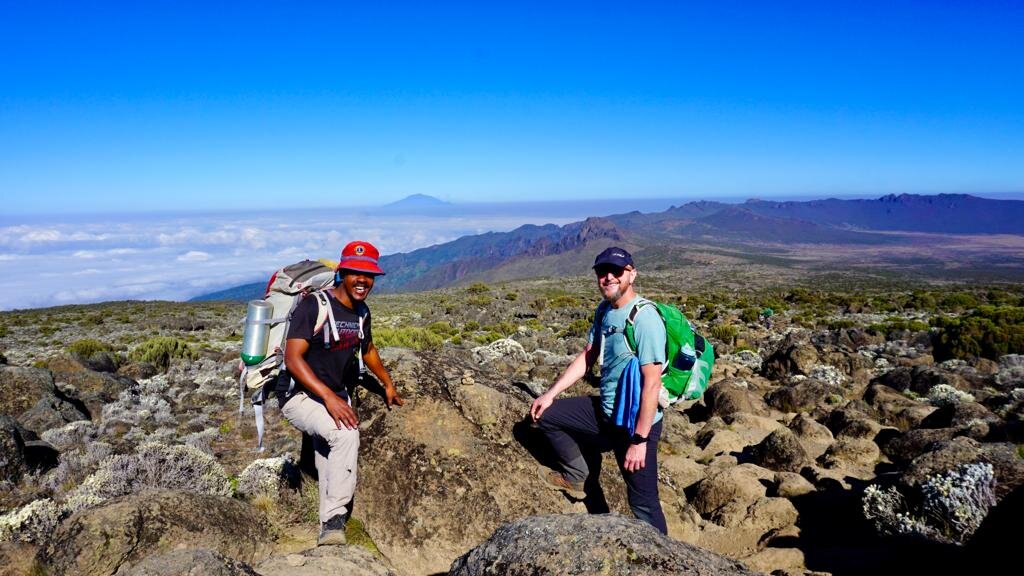
A key acclimatisation day, climbing high to the Lava Tower at 4,600 metres then dropping to sleep low. Climb high, sleep low is the pattern that carries people to the summit. Barranco Camp sits at about 3,960 metres under its great wall. Nights are cold and the stars overhead are as thick as you will ever see them. Each camp is a little higher, and the views open wider as the forest falls behind. The guides set a slow pace, pole, pole in Swahili, because going slowly is how you reach the top.
Porters carry the camp ahead of you, and hot meals are ready when you reach each night’s stop. You drink three or four litres of water a day to help your body adjust to the altitude. The crew check your oxygen and pulse each evening to see how you are acclimatising. Layers come on and off through the day as the sun and the cold trade places. Higher up the air thins and the walking becomes about rhythm rather than speed.
Day 5 Barranco Wall To Karanga Camp
The morning begins with the Barranco Wall, a scramble that looks harder than it is. Beyond it the route rolls across ridges to Karanga Camp at around 3,995 metres. A shorter day keeps your legs fresh for the summit. Each camp is a little higher, and the views open wider as the forest falls behind. The guides set a slow pace, pole, pole in Swahili, because going slowly is how you reach the top. Porters carry the camp ahead of you, and hot meals are ready when you reach each night’s stop.
You drink three or four litres of water a day to help your body adjust to the altitude. The crew check your oxygen and pulse each evening to see how you are acclimatising. Layers come on and off through the day as the sun and the cold trade places. Higher up the air thins and the walking becomes about rhythm rather than speed. Nights are cold and the stars overhead are as thick as you will ever see them.
Day 6 Karanga To Barafu Base Camp
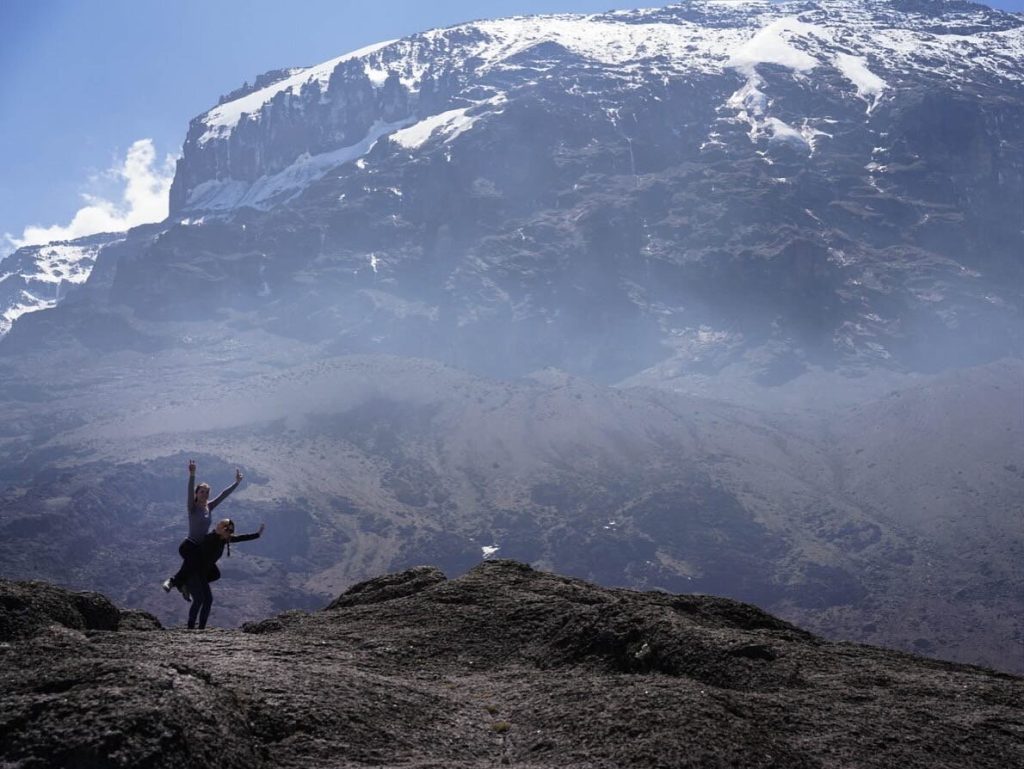
You climb the alpine desert to Barafu Camp at 4,673 metres, summit base. The peak looms close above and the crew prepare you for the night ahead. You eat and rest early before a midnight start. The guides set a slow pace, pole, pole in Swahili, because going slowly is how you reach the top. Porters carry the camp ahead of you, and hot meals are ready when you reach each night’s stop. You drink three or four litres of water a day to help your body adjust to the altitude.
The crew check your oxygen and pulse each evening to see how you are acclimatising. Layers come on and off through the day as the sun and the cold trade places. Higher up the air thins and the walking becomes about rhythm rather than speed. Nights are cold and the stars overhead are as thick as you will ever see them. Each camp is a little higher, and the views open wider as the forest falls behind.
Day 7 Summit Night To Uhuru Peak Then Mweka
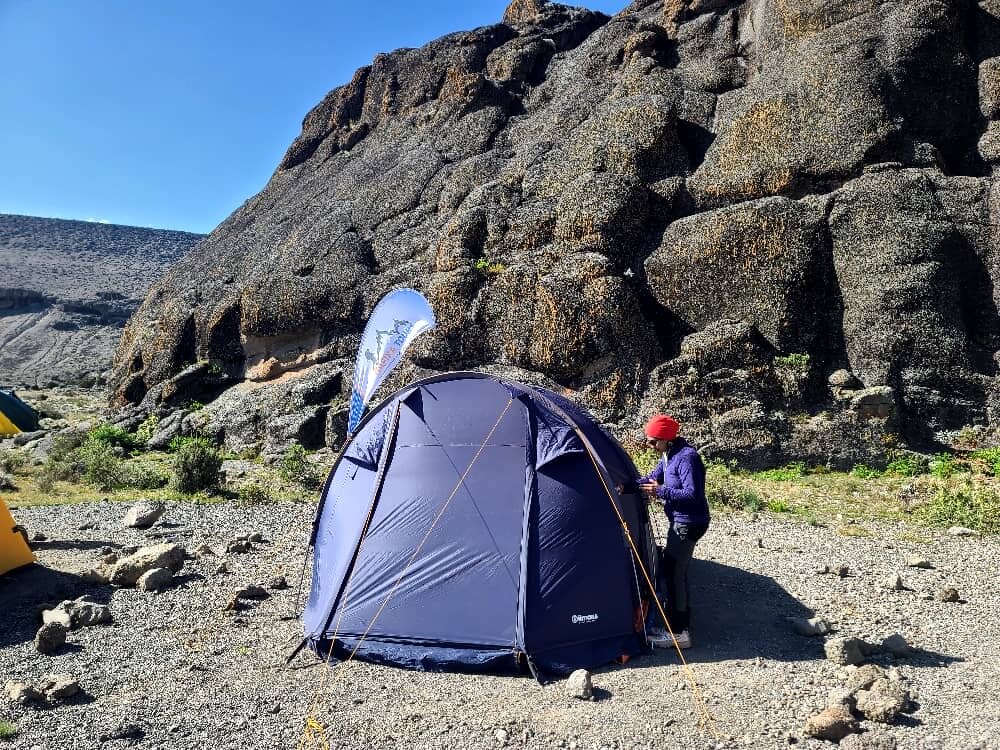
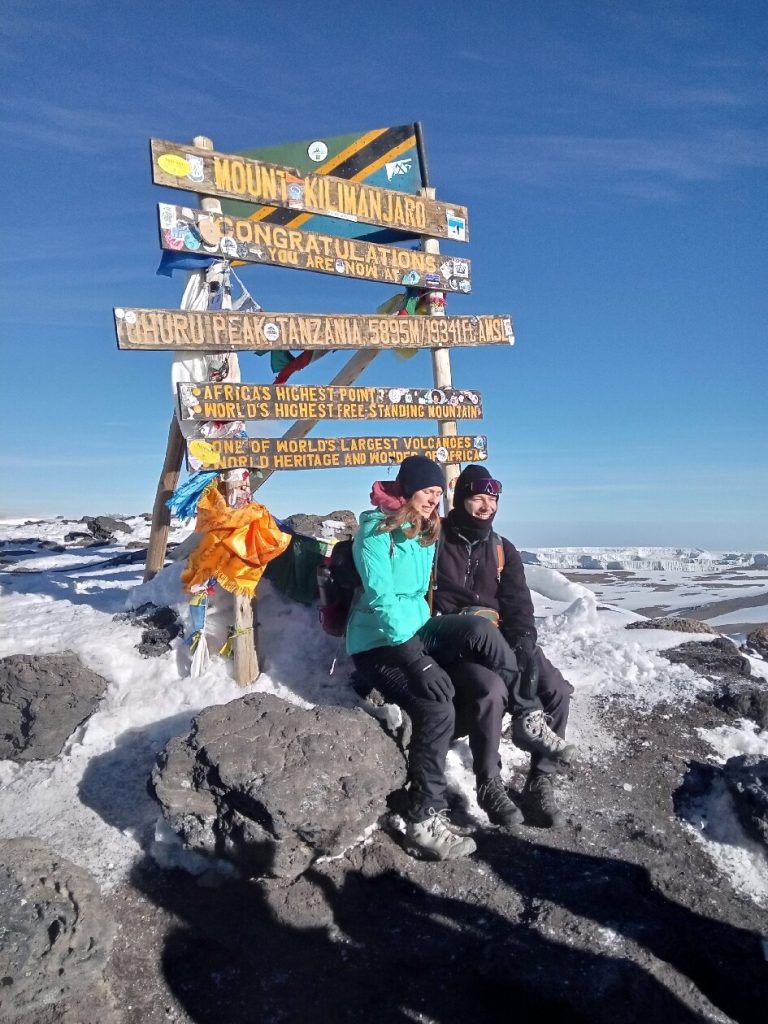
You set out near midnight, head-torches strung up the dark slope. At sunrise you reach Stella Point at 5,750 metres, then Uhuru Peak, 5,895 metres, the highest point in Africa. After photographs among the glaciers you descend to Mweka Camp in thicker air. Porters carry the camp ahead of you, and hot meals are ready when you reach each night’s stop. You drink three or four litres of water a day to help your body adjust to the altitude. The crew check your oxygen and pulse each evening to see how you are acclimatising.
Layers come on and off through the day as the sun and the cold trade places. Higher up the air thins and the walking becomes about rhythm rather than speed. Nights are cold and the stars overhead are as thick as you will ever see them. Each camp is a little higher, and the views open wider as the forest falls behind. The guides set a slow pace, pole, pole in Swahili, because going slowly is how you reach the top.
Day 8 Mweka Camp To Mweka Gate
A last downhill through moorland and forest to the Mweka Gate. Your summit certificate is issued, gold for reaching Uhuru Peak. A vehicle returns you to Moshi for a hot shower and a bed. You drink three or four litres of water a day to help your body adjust to the altitude. The crew check your oxygen and pulse each evening to see how you are acclimatising. Layers come on and off through the day as the sun and the cold trade places.
Higher up the air thins and the walking becomes about rhythm rather than speed. Nights are cold and the stars overhead are as thick as you will ever see them. Each camp is a little higher, and the views open wider as the forest falls behind. The guides set a slow pace, pole, pole in Swahili, because going slowly is how you reach the top. Porters carry the camp ahead of you, and hot meals are ready when you reach each night’s stop.
What’s Included
- Kilimanjaro park, camping or hut, rescue and guide fees
- All meals on the mountain and a full mountain crew (guides, cook, porters)
- Transfers between Moshi and the trailheads
- Drinking water and safe, high-quality camping equipment
What’s Not Included
- International flights and Tanzania visa
- Personal trekking gear (hire available in Moshi)
- Travel insurance covering high-altitude trekking
- Tips for the crew, drinks and personal items
Why Pick This Kilimanjaro Trip?
Standing on the roof of Africa is the draw, and the Lemosho route is a sound way up. Longer routes give your body more time to adjust, and time on the mountain is the single biggest factor in reaching the top. You climb through five climate zones in a week, rainforest, heath, moorland, alpine desert and the arctic summit, watching the country change under your boots. No technical climbing is needed, only fitness, warm kit and a slow, steady pace, while the crew carry the camp, cook the meals and watch your health each evening. For a fit traveller with a week to spare, few trips give a clearer sense of achievement. Only the trail that loops the northern slopes builds in more time at altitude than this one.
Can You See Enough on a 8 Day Kilimanjaro Trip?
On Kilimanjaro, days equal success. An eight-day Lemosho climb reports around 90 percent, and the acclimatisation day on the Shira Plateau accounts for most of the gap between that and the seven-day version. Shorter climbs cost less but summit rates fall as the days drop. This length suits a reasonably fit walker who has trained with hills and long days on foot. What no itinerary can promise is the summit, weather and altitude decide on the night, and a good crew will turn you around if your body says so. If you have the time, a longer route lifts your odds and eases the strain. The published figures by route and duration show how steeply that falls away below seven days.
How Much Will This Kilimanjaro Trip Be Per Person?
A Kilimanjaro climb is priced by the day, because park, camping and rescue fees run well over USD 100 per day before the crew and food. Operators who pay and equip their crews properly are not the cheapest, and cutting corners on Kilimanjaro is a false economy. As a guide, this trip runs from around USD 2,100 to 3,200 per person, with group size and hotel level the main variables. Tell an operator your dates and group size for a firm quote. Only the nine-day itinerary that circles the whole mountain costs more, and it does so purely on length.