Lemosho Route vs Northern Circuit
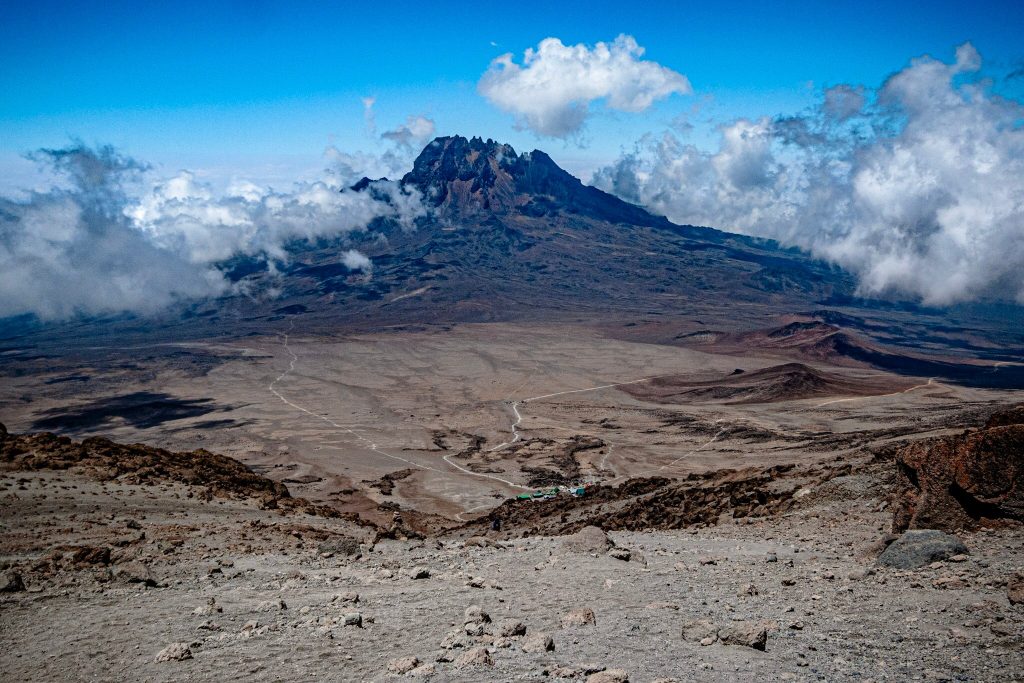
Lemosho and the Northern Circuit share the same start on Mount Kilimanjaro’s western side and split at Moir Hut, where Lemosho turns south for an eight day trek and the Northern Circuit loops north for nine. Summit rates run near 90 percent on Lemosho and 90 to 95 percent on the Northern Circuit, which is the longest and quietest trail on the mountain. Both climb to Uhuru Peak at 5,895 metres in Kilimanjaro National Park in northern Tanzania.
Lemosho and Northern Circuit Trekking Compared at a Glance
Lemosho trek. Londorossi Gate, roughly 70 kilometres, eight days and seven nights. Turns south at Moir Hut onto the Southern Circuit. Arrives on the crater rim at Stella Point. Summit rates near 90 percent.
Northern Circuit trek. Same gate, roughly 90 kilometres, nine days and eight nights. Turns north at Moir Hut and loops the mountain. Arrives at Gilman’s Point. Summit rates 90 to 95 percent.
Shared. The first three or four days. Western forest, Shira Ridge, the Shira Plateau, the Shira Cathedral and Moir Hut are identical on both treks.
Different. Everything after Moir. One trek goes over the Barranco Wall to Barafu; the other crosses the northern slopes to School Hut.
These two are closer relatives than any other pair on Kilimanjaro. If you have already narrowed the seven trails on the mountain down to a long western trek, the remaining question is not which mountain you want to see but how many nights you are willing to pay for and which half of the mountain you would rather walk.
The Shared Trekking Start Through the Western Forest and Plateau
Both treks begin at Londorossi Gate at about 2,250 metres, two to four hours from Moshi, with a forest track carrying you on towards the trailhead. Day one is three to four hours of quiet western forest to Mti Mkubwa at around 2,800 metres, where elephant and buffalo sign turns up on the path and a ranger sometimes walks with groups. Sightings are uncommon.
Day two climbs out of the trees through heather and tall grass to the Shira Ridge, then drops to Shira 1 Camp at roughly 3,500 metres. Cresting that ridge and seeing the plateau open out is the moment both treks are built around.
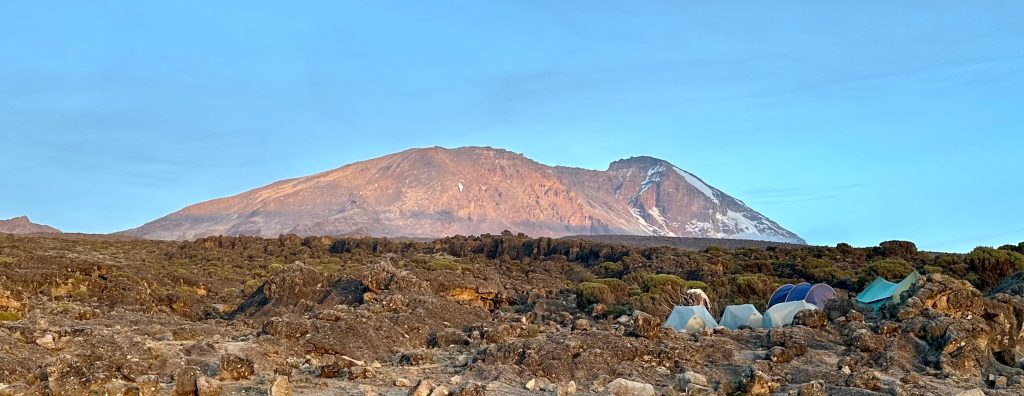
Day three crosses the plateau east past the Shira Cathedral rock buttress at about 3,880 metres towards Shira 2, and then north to Moir Hut at roughly 4,200 metres, tucked beneath the Lent Hills. Guides usually take an afternoon walk up towards 4,400 metres from here before you sleep lower.
Moir is the fork. Up to this point, the two treks are the same holiday.
Where Lemosho Trekking Goes After Moir Hut
Lemosho turns south east and climbs towards Lava Tower at about 4,640 metres, where it merges with the Machame trail, then descends into the Barranco Valley to camp at roughly 3,985 metres beneath the southern ice fields.
The next morning brings the Barranco Wall, a 257 metre non technical scramble taking about an hour, followed by ridges and valleys into the Karanga Valley and back up to Karanga Camp at roughly 4,035 metres. Then a short steep pull through alpine desert to Barafu Camp at around 4,670 metres.
Summit night leaves Barafu at midnight, five kilometres of scree switchbacks over five to seven hours to Stella Point at about 5,750 metres, then roughly an hour along the crater rim to the summit. Descent via Mweka.
What you get on this half of the mountain is the most dramatic scenery Kilimanjaro offers: the senecio forest at Barranco, the view from the top of the wall, and the traverse under the hanging glaciers. What you also get is company, because Machame groups have joined you, and from Lava Tower onwards Lemosho and Machame are the same walk.
Where Northern Circuit Trekking Goes After Moir Hut
The nine day loop around the mountain climbs out of the Moir Valley, detours to the top of the Lent Hills at around 4,700 metres, then heads east and north around slopes almost nobody walks.
Day five crosses a rock field and undulates to Buffalo Camp, also called Pofu, at roughly 4,020 metres. Twelve kilometres, five to seven hours, and you finish lower than you started. Day six goes up over the Buffalo Ridge and down through remote valleys to Third Cave Camp at around 3,800 metres. Seven or eight kilometres, and again slightly downhill on balance.
Two consecutive days ending below where they began, at nearly 4,000 metres, is something no other Kilimanjaro itinerary offers. Day seven then climbs onto the saddle between Mawenzi and Kibo and up to School Hut at roughly 4,750 metres.
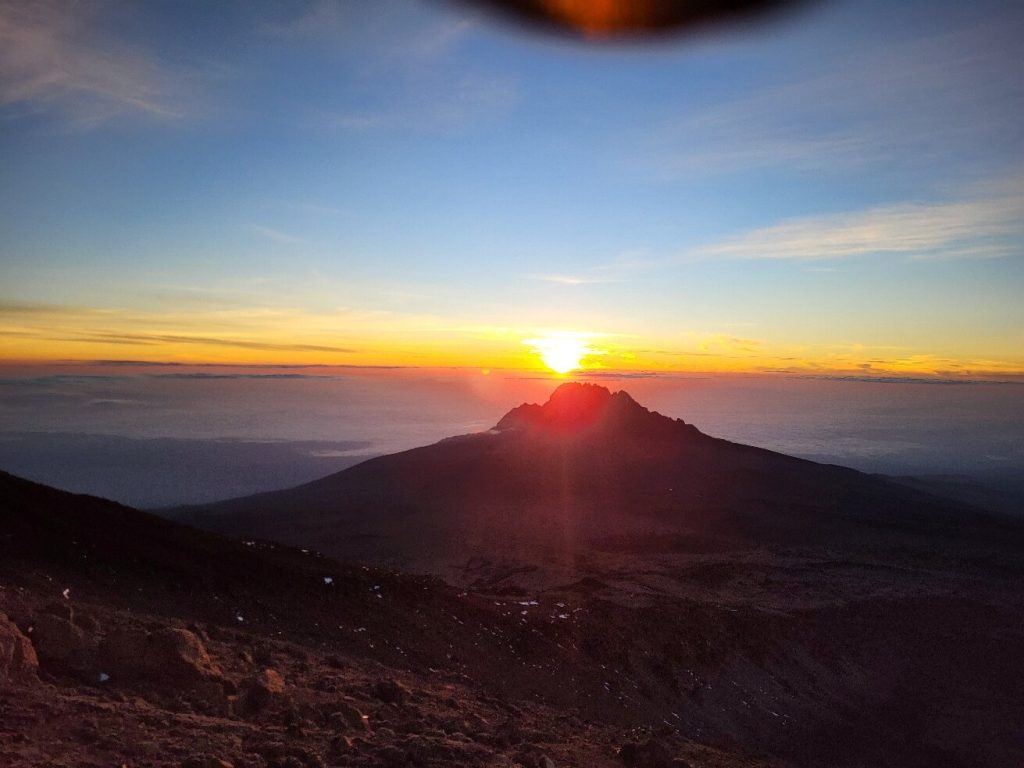
Summit night from School Hut arrives on the rim at Gilman’s Point at about 5,685 metres, and from there it is one and a half to two hours around the crater edge to Uhuru Peak. Descent is down the western side and out via Mweka, so you finish having walked a near complete circle.
The Northern Circuit does not simply add a day to Lemosho. It swaps the Barranco Wall and the southern glacier traverse for two quiet northern days and a longer summit morning. Some climbers consider that a straight upgrade and some quietly regret missing the wall.
Acclimatisation on Each Trekking Route
Both profiles are good. The Northern Circuit’s is better, and the mechanism, which comes down to how many nights you spend on the mountain, is easy to see once laid out.
The standard eight day Lemosho itinerary gives you seven nights, with one acclimatisation night at Moir Hut above 4,000 metres and two useful no gain days at Barranco and Karanga. That is why it reaches roughly 90 percent.
The Northern Circuit gives you eight nights, with Moir plus two full days on the northern slopes that end lower than they began, plus the Lent Hills walk. By the time you reach School Hut you have spent five nights above 3,800 metres. That is why it reaches 90 to 95 percent.
The honest framing is diminishing returns. The jump from a six day trek to an eight day one is enormous, worth something like 20 to 30 percentage points, a pattern that runs right through the reported summit figures for every trail. The jump from eight days to nine is worth perhaps five. Real, but modest, and it costs an extra day of park fees, wages and leave.
Summit Night Compared on Both Treks
This is the one place where Lemosho holds an advantage and it deserves more attention than it usually gets.
Lemosho arrives from the west at Stella Point, and the rim walk to Uhuru Peak takes about an hour on gentle ground. The Northern Circuit arrives from the east at Gilman’s Point, and the rim walk takes one and a half to two hours. After a night without sleep at 5,700 metres, an extra hour at that altitude is not a triviality.
Total summit day distance is also longer on the Northern Circuit, with roughly six kilometres of ascent and thirteen of descent, and the day commonly runs eleven to sixteen hours against twelve to fourteen on Lemosho.
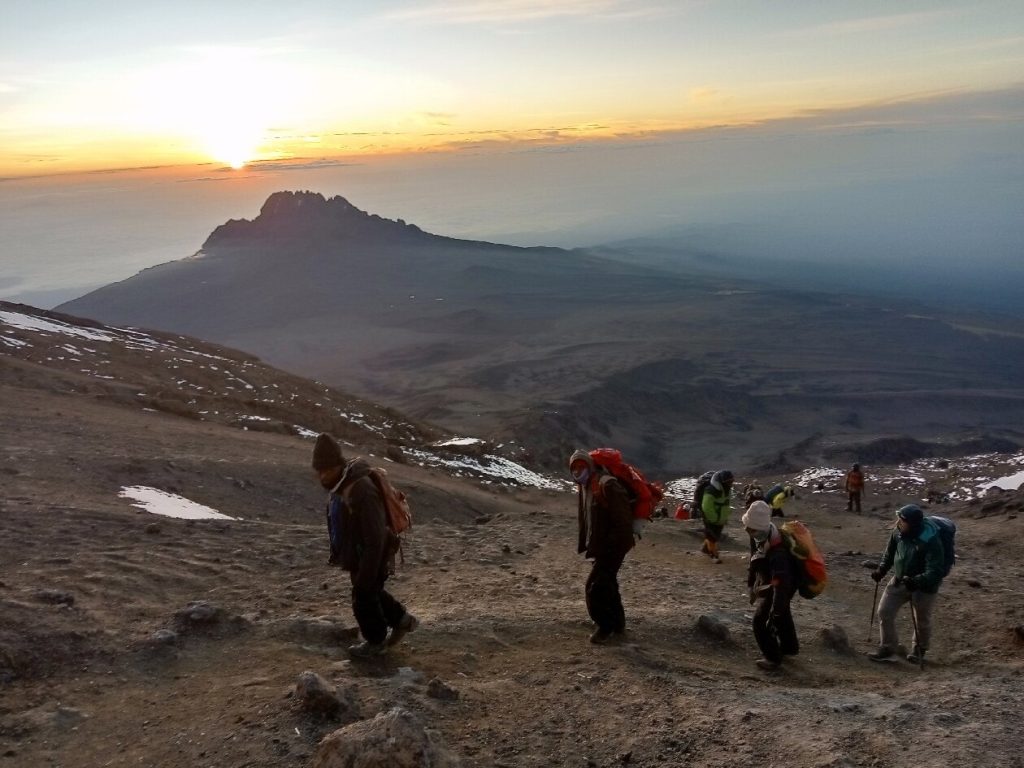
Temperatures are the same on both, between roughly minus seven and minus twenty degrees Celsius before dawn and colder with wind chill. So the Northern Circuit buys better preparation and spends part of it on a harder finish. Most climbers still come out ahead, which is what the reported figures suggest.
Crowds, Camps and Scenery on Each Route
Both treks are quiet for three days. After Moir they diverge completely.
Lemosho inherits Machame’s traffic, and Machame carries close to half of all Kilimanjaro climbers. Barranco, Karanga and Barafu are busy camps, and in July and August the wall queues in the morning and Barafu is noisy through the night as groups leave at staggered times.
The Northern Circuit stays empty. Buffalo Camp and Third Cave often hold one or two groups. School Hut is calmer than Barafu. Views run north across the plains towards the Kenyan border on ground almost nobody sees, and by the end you have walked nearly 360 degrees of the mountain rather than one flank of it. That combination of solitude and acclimatisation is why the northern loop heads so many shortlists of the best way up Kilimanjaro.
Lemosho shows you the most dramatic side of Kilimanjaro with a few hundred other people. The Northern Circuit shows you the whole mountain with almost nobody. Neither is the wrong answer.
Which Kilimanjaro Trek to Book
Book eight day Lemosho if. Your leave runs to eleven or twelve days, budget matters, and you want the Barranco Wall and the southern glacier traverse in your week.
Book nine day Northern Circuit if. You have a full fortnight, this is a one time climb, and maximising your odds outranks everything else.
Book the Northern Circuit if. Crowds would genuinely spoil the week for you, or you are climbing in July or August when the southern camps are at their fullest.
Book Lemosho if. You are travelling with anyone who may need to descend early, since the southern trail sits closer to the Mweka exit than the remote northern slopes do.
That last point is worth a moment. On the northern slopes you are a long way from a road on days five and six. Evacuation is possible and operators plan for it, yet the practical reality is that Buffalo Camp is further from help than Barranco is. For most fit climbers that is an abstraction. For anyone with a health condition worth mentioning to a guide, it is part of the calculation. And if your leave will not stretch to eight nights on the mountain at all, a seven day Lemosho departure keeps the plateau crossing and drops the Moir day instead.
Best Time to Trek Lemosho or the Northern Circuit
January to early March gives warmer days, clear mornings and often snow on the crater rim. Late June to October is the long dry season and the most reliable weather, with July and August the busiest weeks and September quieter while staying dry.
April and May are the long rains, and both treks share the same weak point: the Londorossi forest track, which can defeat vehicles and turn a drive into a longer walk in. Beyond the plateau, the Northern Circuit holds up better because the northern flank sits in the mountain’s rain shadow, while Lemosho’s southern half takes the wet. November into early December brings shorter rains. If your dates fall in a damp stretch and you can afford the extra nights, the northern loop is the more comfortable trek.
Getting to Londorossi Gate for Either Trek
Fly into Kilimanjaro International Airport between Moshi and Arusha, roughly an hour from Moshi by road. Moshi is the base and the town where both briefings happen. Londorossi is two to four hours away plus the forest track, so day one on either trek is a long morning in a vehicle.
Both finish at Mweka Gate on the southern side, so your pick up point is the same either way. Plan a night in Moshi before your briefing and a night after the descent. Sleeping bags rated well below freezing, down jackets, poles and gaiters can be rented in town, which is worth doing on a nine day northern loop where every kilogram counts against the 15 kilogram duffel limit.
Frequently Asked Questions About Lemosho and the Northern Circuit
How much more does the Northern Circuit cost than Lemosho?
Expect roughly $400 to $600 more. Eight day Lemosho typically runs $2,400 to $3,500 per person with a mid range operator, while nine day Northern Circuit runs $2,800 to $3,800, with private premium versions above $4,500 on both. The whole difference is the extra day, since the trailhead, the crew structure and the exit gate are the same.
Why does one extra day add so much to the price?
Because park charges accrue daily. Conservation fees run about $70 per person per day and camping about $50 per person per night, before the 18 percent VAT most published tariffs exclude. Add another day of wages and food for a crew of ten or more, plus the fact that longer routes carry extra porters because more food goes up the mountain. The cost per day on both treks is nearly identical.
Is the Northern Circuit worth the extra day?
If maximising your chances is the goal, yes, though the gain is smaller than the marketing suggests: roughly five percentage points, from around 90 percent to somewhere between 90 and 95. The stronger arguments are solitude and walking the whole mountain. If your budget or leave is stretched, eight day Lemosho gives you most of the benefit for less.
Which has the harder summit night?
The Northern Circuit. It arrives on the crater rim at Gilman’s Point and faces one and a half to two hours of rim walking to Uhuru Peak, against about an hour from Stella Point on Lemosho. Total summit day distance is longer too. The compensation is that eight nights of acclimatisation puts you at School Hut in better condition than seven nights puts you at Barafu.
Does the Northern Circuit include the Barranco Wall?
No. The wall sits on the Southern Circuit, which the Northern Circuit avoids entirely by turning north at Moir Hut. If climbing the wall is something you want from the week, that is a genuine argument for Lemosho, since it is one of the most enjoyable hours on the mountain.
How much should I tip on each trek?
Around $300 to $400 per climber on an eight day Lemosho and $350 to $450 on a nine day Northern Circuit. Pooled across the group rather than paid per climber, the commonly used daily figures are $20 to $25 for the lead guide, $10 to $15 for assistant guides and the cook, and $5 to $10 for each porter. Bring clean US dollar notes from home, as cards are useless on the mountain.
Booking Your Kilimanjaro Trip
The safari companies and tour operators listed on this website put trips like this together for a living and know which camps, guides and routes actually deliver. We are an independent guide to Kilimanjaro; we do not book or sell tours ourselves.
When you are ready, arrange your safari, tour or holiday with one of the recognised operators listed here. Tell them your dates and what matters most, and a real person, not a form, will handle the itinerary, park bookings and logistics for you.